Real fur is warmer, softer, lasts for decades and is a natural material, while faux fur is cheaper, easier to clean and made from plastic fibres. Which one is better depends on what matters most to you: warmth, feel and lifespan favour real fur, while price and the question of animal use favour faux.
Both have become very good at looking glamorous. This guide compares them honestly on warmth, feel, lifespan, care, end of life, cost per wear and ethics, so you can decide for yourself.
What is the difference between real fur and faux fur?
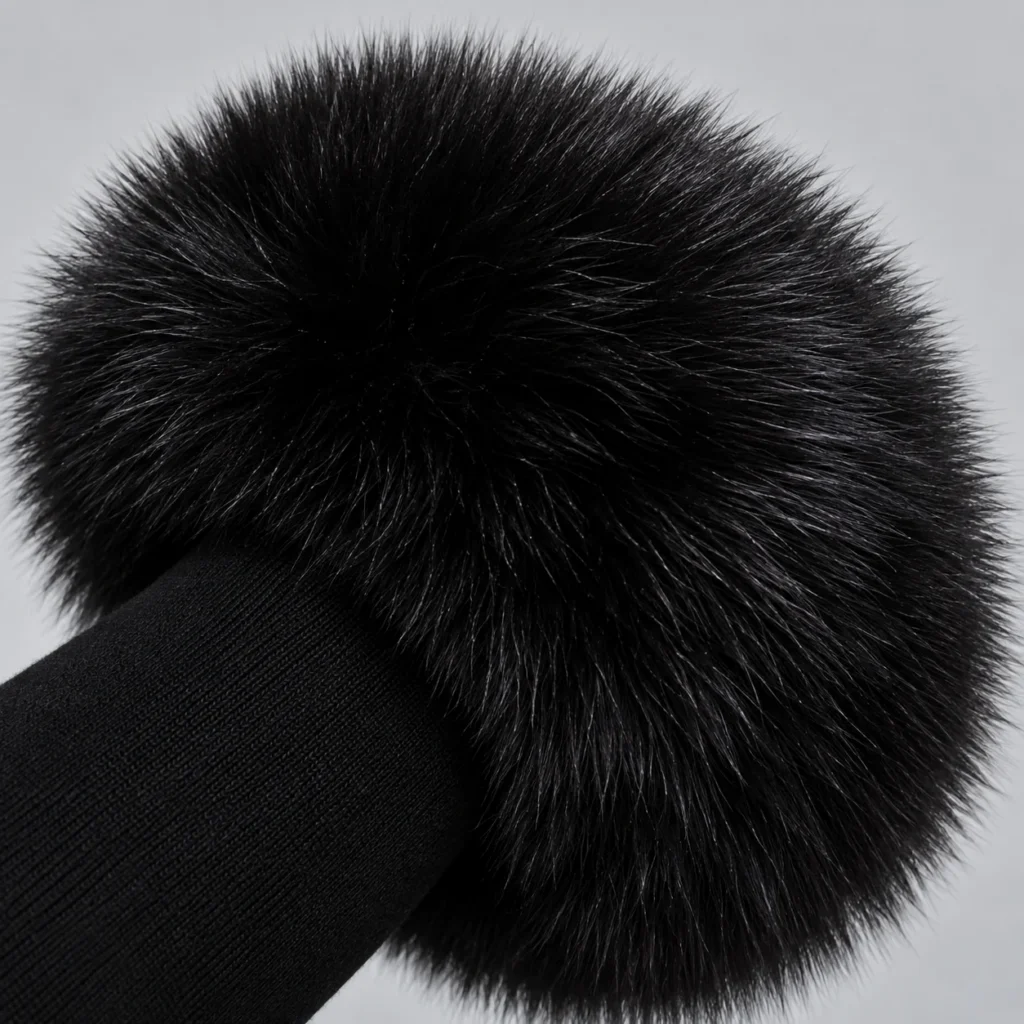
Real fur is the skin of an animal, tanned so the leather stays soft, with the hair still attached. It has two layers of hair: long, glossy guard hairs on top and short, dense underfur beneath.
Faux fur is a textile. Synthetic fibres, usually acrylic, modacrylic or polyester, are knitted or woven into a fabric backing and then cut to length. Good faux fur imitates guard hairs and underfur with fibres of different lengths, but it is still a plastic pile on cloth.
| | Real fur | Faux fur | |—|—|—| | Base | Thin, soft leather | Woven or knitted fabric | | Hair | Guard hairs plus underfur, tips taper to a point | Synthetic fibres, tips usually blunt | | Warmth | High, wind-resistant | Moderate | | Lifespan | Decades with care | A few seasons to a few years | | Cleaning | Shake and air; specialist clean for coats | Often washable | | End of life | Natural material | Plastic | | Price | Higher | Lower |

Is real fur warmer than faux fur?
Yes. The New York furrier Day Furs puts it simply: the warmth of fur “is determined by the underfur, which acts as an insulation”. That fine, crimped underfur traps a layer of still air against you, and the leather underneath stops wind getting through.
Faux fur traps some air too, but the fabric backing is more porous and the fibres compress more easily. You notice the difference most where the cold actually gets you: around the face, the ears and the gap between glove and sleeve.
One honest caveat: a fur collar or fur cuffs will not turn a thin jacket into a winter coat. Fur warms the part of you it touches. On our Nordlys Down Jacket, for example, the 90% duck down keeps your body warm and the large detachable fox collar keeps the wind off your neck and chin. Each does its own job.
How do they compare on feel and look?
This is where most people decide. Real fox fur moves. The long guard hairs catch the light and fall back into place when you touch them, and fox is remarkably light for its volume. Rex rabbit, the fur on our Halo Earmuffs, is the opposite: short, dense and velvety, with guard hairs the same length as the underfur.
Faux fur can look superb on the hanger and in photographs. Up close, it tends to have a more uniform colour and a slightly dry or squeaky feel, and the fibres can static in cold, dry air. The French fur house Yves Salomon notes that real fur shows “subtle gradations”, with each hair potentially showing several shades, while faux fur looks more even.

How long does real fur last compared with faux fur?
Real fur is built to last. The Fur Institute of Canada calls fur “extremely durable when cared for correctly”, and it is common to see fox and mink pieces handed down through families. Accessories, which are not crushed under a bag strap or a car seat belt, last even longer than coats.
Faux fur ages faster. The pile flattens where it rubs, mats when it gets wet and dries, and loses its shine after washing. With regular wear, a faux piece can look tired within a few winters.
Rabbit is the exception on the real side: it is softer and more delicate than fox, and sheds more, so a rabbit piece will not last as long as a fox one. That is worth knowing when you choose. Our fur types guide goes through each species.
Which is easier to care for?
Faux fur wins on convenience, because many faux pieces can go in a gentle wash. Real fur should never go in water or a washing machine.
But real fur needs surprisingly little. Shake it gently, let it air-dry away from heat if it gets damp, and keep perfume and hairspray off it. Fur with plenty of guard hairs, like fox, copes well with light rain: the Fur Institute of Canada says “if your fur has lots of guard hairs, don’t fear the rain.” Coats benefit from a specialist clean about once a year; small accessories rarely need one. Our guide to caring for real fur covers the details.
Which is better for the environment?
There is no single, clean answer, and anyone who tells you otherwise is selling something. Here is what the evidence actually says.
Faux fur is plastic. Acrylic and polyester are made from fossil fuels, and they do not biodegrade. Like other synthetic textiles, they also shed microfibres. A 2016 Plymouth University study published in Marine Pollution Bulletin estimated that a 6 kg wash of acrylic fabric could release around 729,000 fibres, more than polyester or polyester-cotton.
Real fur is a natural material. A test by the Belgian laboratory Organic Waste Systems, commissioned by the International Fur Federation and Fur Europe, found natural fur samples biodegraded under landfill-like conditions while the faux fur samples showed no measurable breakdown. Keep in mind who funded it.
Production is another matter. A 2011 life-cycle study by the Dutch consultancy CE Delft, commissioned by animal welfare organisations, found the environmental impact of producing mink fur was at least three times higher than the least favourable faux fur. Again, keep in mind who commissioned it.
What both sides agree on is that the most sustainable garment is the one you wear for a long time. A fur collar worn for twenty winters and a faux coat replaced every two are not the same purchase, whatever the label says.
What about cost per wear?
Real fur costs more up front. It often costs less per wear.
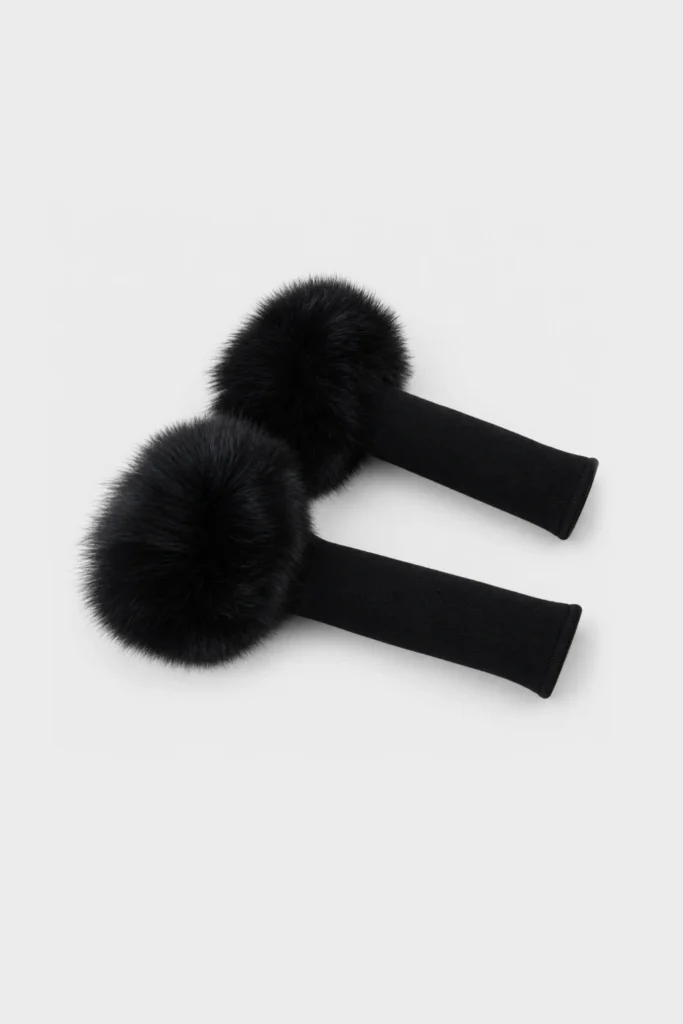
Take our Frost Cuffs at €95. Worn on 40 cold days a winter for ten winters, that is 400 wears, or about 24 cents a wear. A cheaper faux trim only matches that if it survives just as many wears, and most do not.
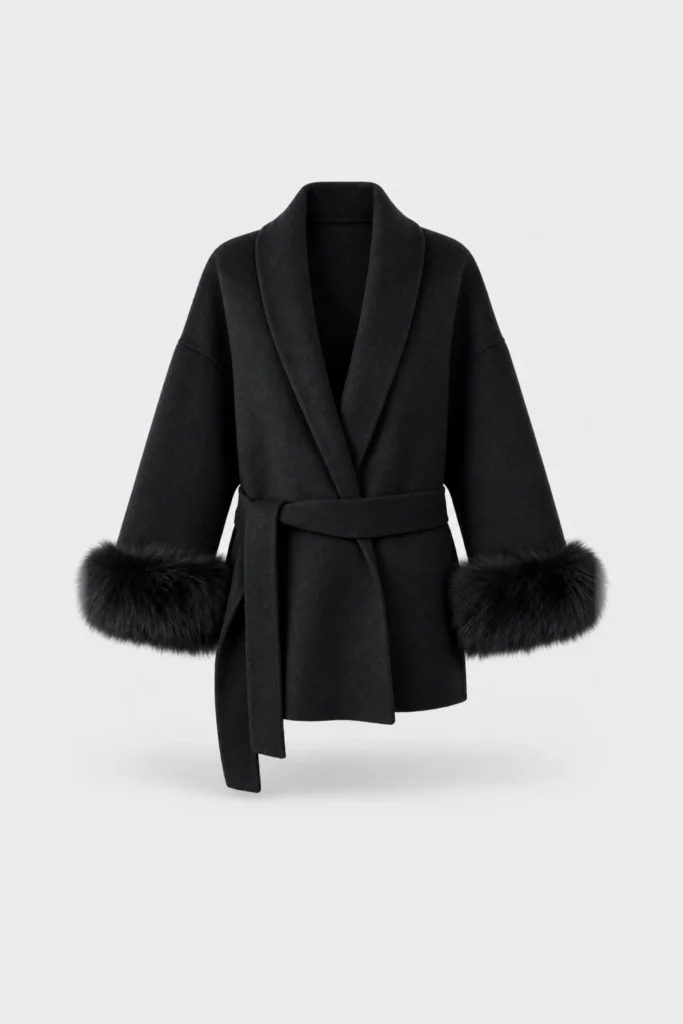
The same logic applies to bigger pieces. The Tundra Wrap Jacket is the one we would point you to if you want to feel the difference for yourself: double-face wool with a belt and a shawl collar, and very full fox-fur cuffs that are the only fur on the coat. It ends at the upper thigh, it is rated 4.9 by 80 customers, and it is the kind of coat you will still be wearing in ten years. One practical note from those reviews: the cut runs small and the sleeves sit short, so size up if you are between sizes.
Is real fur ethical?
This is a values question, and reasonable people come down on different sides.
The case for real fur: it lasts decades, it is a natural and biodegradable material, and it replaces plastic garments that are bought, shed and thrown away. Many wearers also feel that a well made piece, kept and cared for, is a more respectful use of an animal than fast fashion is of anything.
The case against: the animals. In July 2025 the European Food Safety Authority published a scientific opinion finding that the main welfare concerns for farmed mink, foxes, raccoon dogs and chinchillas relate to the size and barren conditions of the cages used in current fur production. In March 2026, the UK government published an opinion from its Animal Welfare Committee raising similar concerns.
We think you deserve the facts and the freedom to decide. Our article is it OK to wear real fur? goes deeper into both sides, and how to handle comments if you do wear it.
Is real fur legal?
Yes, in the UK, the EU and Switzerland it is legal to buy, sell and wear fox, rabbit and mink fur. Fur farming is banned in the UK, and Switzerland has strict labelling rules. Cat and dog fur is banned. For the full picture, read is fox fur legal in the UK?
How can you tell which one you are looking at?
Part the hairs and look at the base. Real fur grows from a thin leather skin; faux fur sits on a woven fabric. Real hairs also taper to a fine point. Our guide on how to tell if fur is real walks you through six simple checks.
For textile garments with fur trim, look at the label too. Under EU Regulation 1007/2011, which the UK has kept, textile products with fur must carry the phrase “contains non-textile parts of animal origin”.
So which should you choose?
Choose real fur if you want maximum warmth around your face and wrists, a piece that will last for many winters, and the feel and movement that only natural fur has. Start with an accessory or a trim: it is where real fur makes the biggest difference for the smallest commitment. Our fox fur page explains how fox behaves.
Choose faux fur if price is the priority, if you want to put it in the washing machine, or if wearing animal fur does not sit right with you. There is no wrong answer, only the one that suits your values and your winter.