There are four types of fur you are most likely to meet in winter accessories: fox, rabbit, rex rabbit and mink. Fox is long, silky and voluminous; rabbit is feather-light and fluffy; rex rabbit is short and velvety; and mink is short, dense and glossy.
Knowing the difference is not just furrier trivia. It tells you how a piece will look on you, how it will feel against your skin, whether it will leave hairs on your black jumper and how much care it needs. Here is the plain-English version, with the way each one behaves on the pieces we make.
What does fox fur look and feel like?
Fox is the fur most people picture when they think “fur”. It has long, silky guard hairs over a dense, soft underfur, which is what gives it that full, airy volume and the way it moves when you turn your head. The French fur house Yves Salomon describes fox as “synonymous with volume, sensuality, and movement”, which is about right.
Each pelt varies a little in length and shade, so no two collars or cuffs are quite identical. Fox also takes dye beautifully. On lighter dyes, Yves Salomon notes, the darker guard hairs can stay faintly visible, which is why a pale pink or silver fox has depth rather than looking flat.
Warmth: remarkably warm for its weight, because the underfur traps air without bulk. The New York furrier Day Furs puts it simply: the warmth of fur “is determined by the underfur, which acts as an insulation.”
Shedding: a few loose hairs in the first wears are normal, then it settles.
Best for: anything that should frame you. Collars, hoods, hat brims and cuffs.
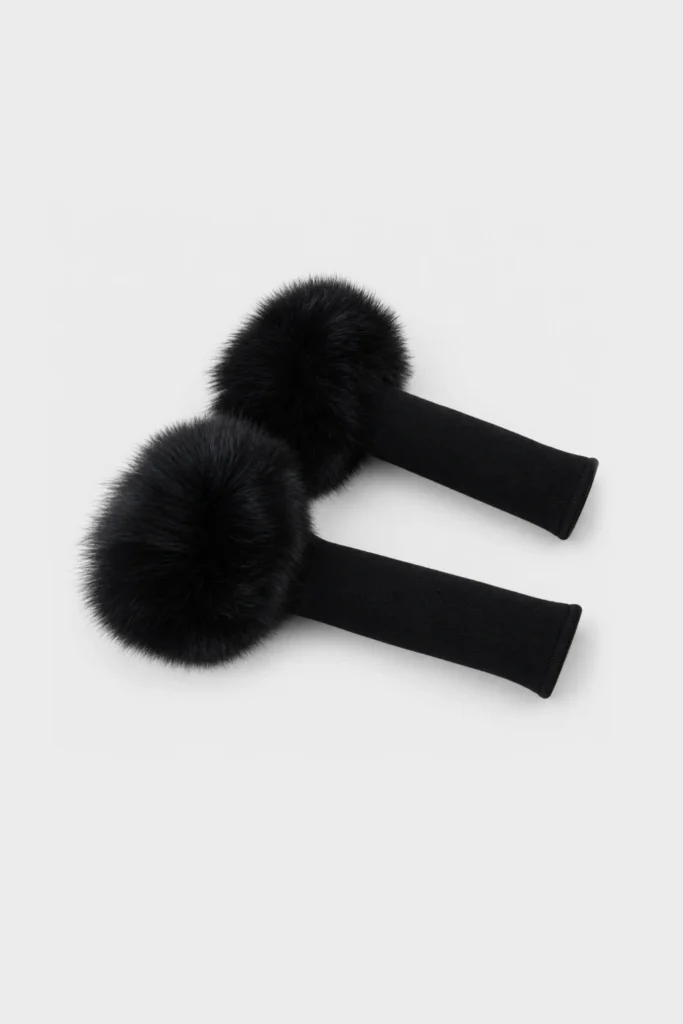
That is why fox is our main fur. It forms the full ring on the Svalbard Hat, where the brim sits at the eyebrow and covers the ears. It is the 13 to 15 cm ring of the Frost Cuffs, the frame around the Fjord cardigan’s hood and the very full cuffs on the Tundra Wrap Jacket and Coat. A small note: “Natural” on the Svalbard Hat and Frost Cuffs is a colour name, a golden fox with darker tips. You can read more on our fox fur page.

What is rabbit fur like?
Rabbit is fine, soft and almost weightless. The hairs are long and delicate, so the surface is a soft, even fluff rather than the layered look of fox. It is among the softest furs to the touch, which makes it lovely for pieces worn right against the neck.
The trade-off is fragility. Yves Salomon notes that long-haired varieties are “particularly delicate and naturally prone to shedding”, and advises against repeated dyeing because it weakens the hair. That is why rabbit is often cut into strips and knitted: the knitting holds the fur securely and makes the piece supple and stretchy.
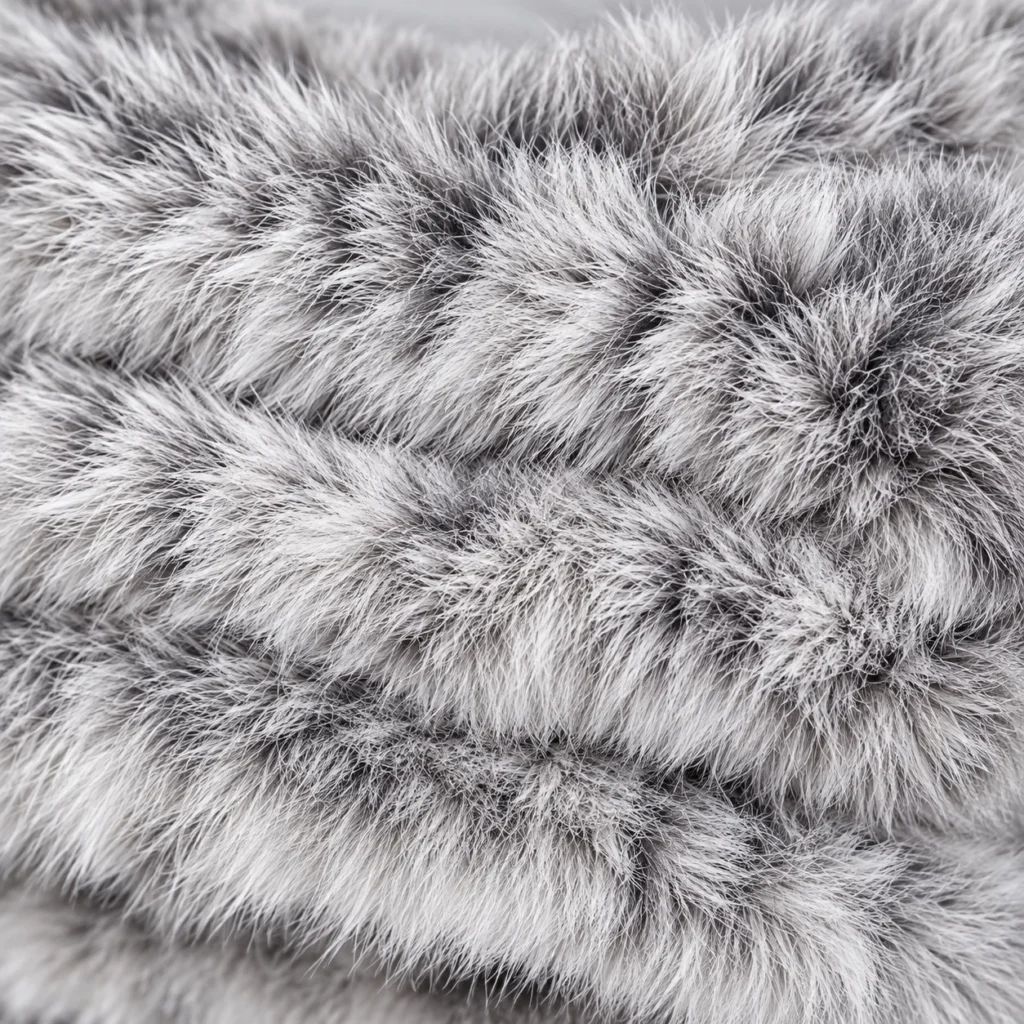
Warmth: light and warm, without weight.
Shedding: the most of the four. A little loose fluff at first is natural.
Best for: collars and headbands, where softness matters more than drama.
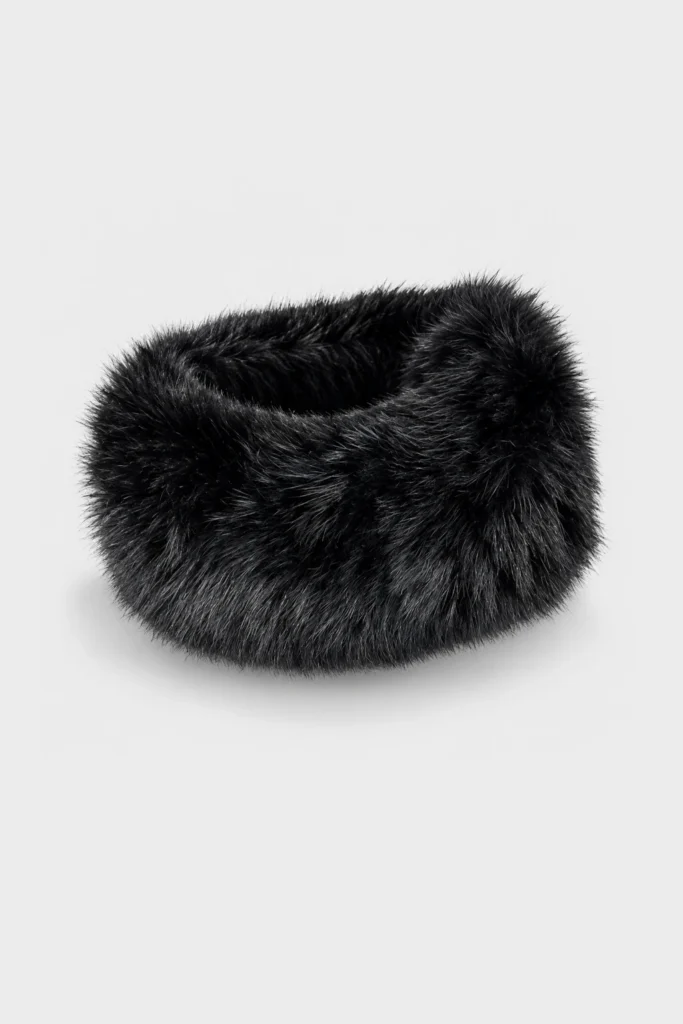
Our Lumi Collar is exactly this: hand-knitted strips of rabbit with a short pile, forming a snug tube about 11 to 15 cm tall that runs from the shoulder to just under the chin. Pull it up and it becomes a headband. More on our rabbit fur page.
What is rex rabbit and why does it feel like velvet?
Rex rabbit is a breed, not a finish. Its guard hairs are the same length as its underfur, so there are no long hairs poking out of the surface. The result is short, dense and even, with a soft matte finish and a feel very close to velvet.
It sounds like a small difference, but you notice it immediately. Rex feels cushioned and denser than classic rabbit, it stays neat, and because there are no long guard hairs to work loose, it sheds less.
Warmth: close and comforting, ideal against the ear or face.
Shedding: low.
Best for: earmuffs, headbands and fine trims that should look tidy.
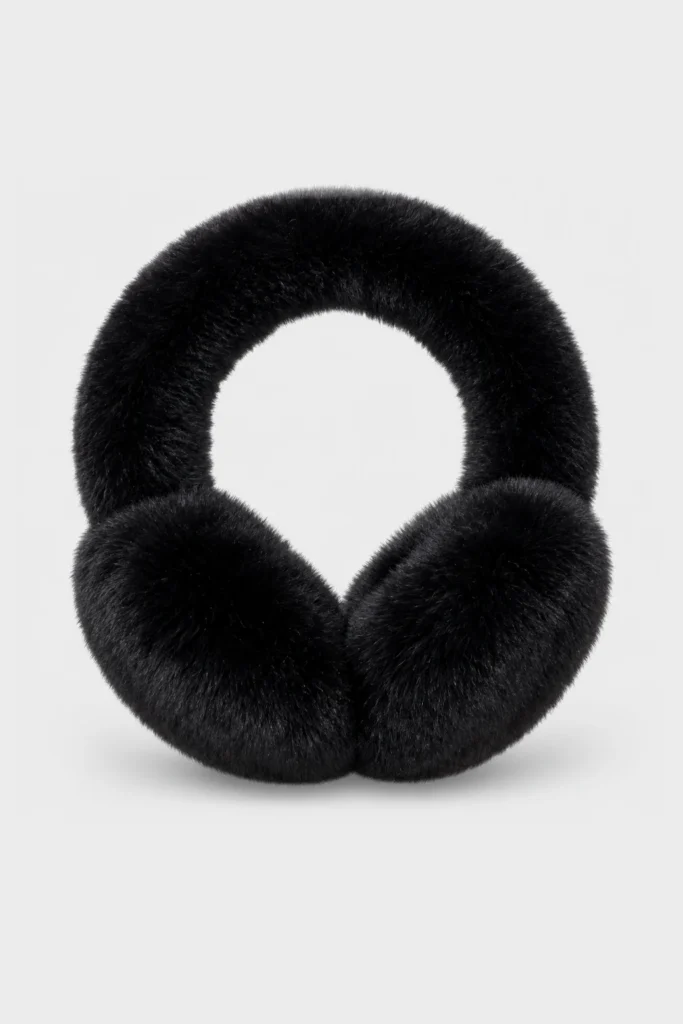
This is the fur on our Halo Earmuffs, which are rated 4.9 by 31 customers. The thick fur band and the cups are one continuous piece, and the cups cover the whole ear, so you get warmth with a very clean, minimal line. If your first worry about fur is finding hairs on your coat, rex is the one to start with. See our rex rabbit fur page.
What is mink fur like?
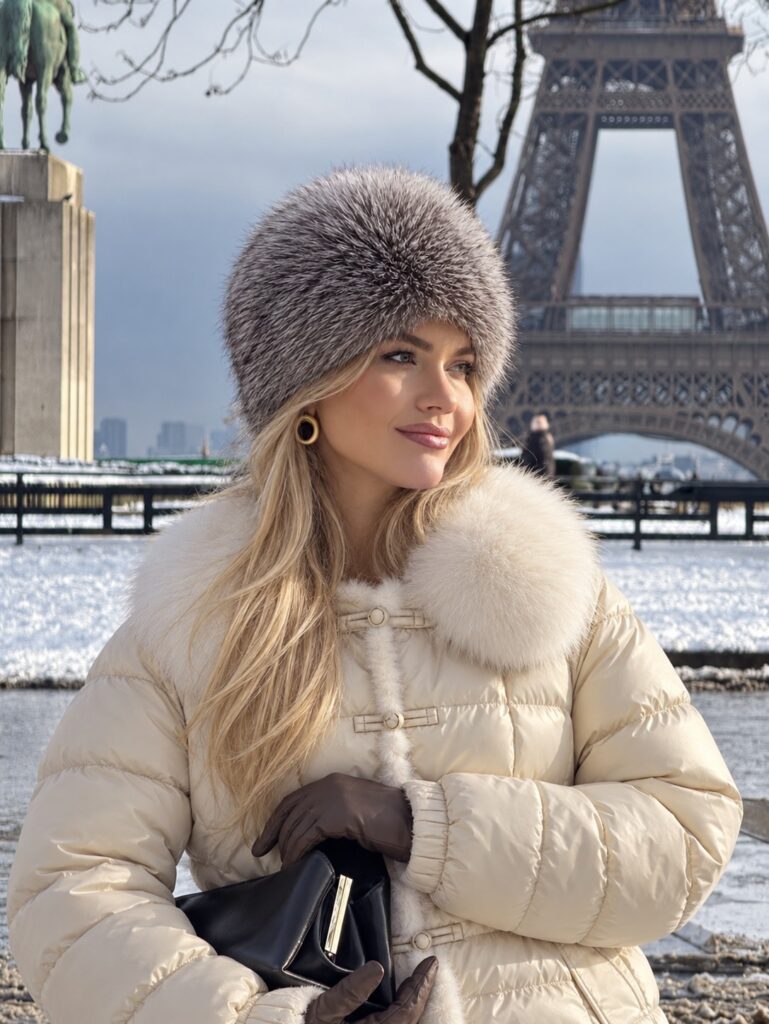
Mink is short, dense and naturally glossy, one of the lightest and smoothest furs there is. The pile lies close and even, with a soft sheen that deepens the colour of whatever it trims. Day Furs calls mink “by far our most popular fur product”, and you can see why: it is quietly luxurious rather than loud.
Warmth: very warm and light; the density keeps cold air out.
Shedding: low.
Best for: refined trims and edges.
We use mink in one place only: the narrow trim, about 2 cm wide, that runs down the placket of the Nordlys Down Jacket, alongside its large detachable fox collar. It is a nice example of two furs doing two jobs: fox for volume at the face, mink for a fine, polished edge. One thing to know: mink is the most cautious of the four in wet weather, so treat the Nordlys trim gently in rain. More on our mink fur page.
Types of fur at a glance
- Fox: long and voluminous. Very warm. A few hairs at first. Collars, hoods, hats, cuffs.
- Rabbit: light and fluffy. Warm without weight. Sheds the most. Knitted collars and headbands.
- Rex rabbit: short and velvety. Close warmth. Sheds little. Earmuffs and neat trims.
- Mink: short and glossy. Very warm. Sheds little. Fine trims on outerwear.
Which type of fur should you choose?
Start with the job the piece has to do, then let the fur follow.
If you want a piece that changes your whole silhouette, choose fox. A fox collar or hat draws the eye to your face, and fox cuffs add movement at the wrist. The piece we would point you to first is the Frost Cuffs: a full ring of fox on a 30 cm knit sleeve that slips over your coat sleeve at the wrist, so the coat you already own suddenly looks like a different coat.
If you want softness and something you can wear every day without thinking, choose rabbit or rex rabbit. Rex is the low-fuss choice; classic rabbit is the softest and most playful.
If you like your luxury discreet, mink as a trim is the most understated of the four.
Is real fur warmer than faux?
Real fur insulates through its underfur, which traps warm air. Faux fur is synthetic fibre on a woven textile backing: it can look convincing, but it is plastic, and it ages very differently. If you are weighing the two, our guide to real fur vs faux fur goes through warmth, feel and how long each lasts. And if you are unsure whether a piece in your wardrobe is real, read how to tell if fur is real.
How do you look after each type?
The basics are the same for all four: shake gently after wearing, let the fur breathe on a padded hanger or in a cotton bag, keep it away from direct heat and perfume, and leave deep cleaning to a fur specialist. The differences are in the details. Fox handles a light shower better than rabbit or mink, and rabbit needs the gentlest handling of all. Our full guide on how to care for real fur covers rain, storage and cleaning step by step.