To care for real fur, shake it gently after each wear, hang it on a broad padded hanger (or keep small pieces in a cotton bag), keep it away from heat, plastic and perfume, and leave cleaning to a fur specialist. That is genuinely most of it: real fur is far tougher than its reputation, and a few simple habits keep it looking good for many winters.
Below is everything else, organised by the moments that actually come up: the end of an ordinary day, coming in from snow or rain, putting fur away for summer, cleaning, and the two everyday enemies of a fur collar, makeup and perfume. The advice draws on the Fur Institute of Canada, the New York furrier Day Furs and the French fur house Yves Salomon, plus what we know about how our own pieces are made.
How do you care for real fur every day?
When you take it off, give it a gentle shake. That is all a fur needs to fall back into shape and release any dust. Then let it breathe: coats and jackets on a broad, padded hanger, and hats, cuffs, collars and earmuffs on a shelf or loosely in a cotton bag. The Fur Institute of Canada is blunt about the alternative: “flimsy wire hangers are an absolute no-no”, because they push the shoulders out of shape.
A few small habits make a big difference:
- Watch the shoulder bag. The Fur Institute warns that “shoulder bag straps can break fur hairs and create bald patches.” With a fur collar or a coat with fur at the shoulder, carry your bag in your hand or on the other side.
- Don’t sit on it for hours. Long car journeys or a dinner spent leaning back on a fur collar flatten it. Take it off and lay it on the seat beside you.
- Keep it off the radiator. Direct heat dries fur out, and every fur care source we trust warns against it.
- Skip the brush. A hard brush pulls hairs out. A shake does the job better.
The good news is that accessories are the easiest fur to live with. A hat or a pair of cuffs comes off and goes on a shelf; there is no heavy coat to hang and no shoulders to protect.

What should you do after snow or rain?
This is one of the most common worries about fur, and the answer is calmer than most people expect. Day Furs says “mild rain or snow will not damage your fur,” and the Fur Institute adds that if your fur has plenty of guard hairs, which fox does, you need not fear the rain. A snowfall on a fox hat is part of the point: dry snow sits on the surface and comes off with a shake.
What matters is how you dry it:
- Shake off the water or snow as soon as you are inside.
- Hang or lay it flat in a ventilated room. Coats on a broad hanger; hats on a bowl or a rolled towel so they keep their shape.
- Let it dry naturally. No hair dryer, no radiator, no fireplace. Yves Salomon puts it plainly: “Never use a hair dryer or radiator.”
- Don’t brush it wet. Once it is fully dry, a shake is enough to bring the volume back.
If a piece has been genuinely soaked, rather than just caught in a shower, take it to a furrier. And be a little gentler with the short furs. Yves Salomon advises against wearing mink in the rain and says rabbit needs more protection from moisture, so on a properly wet day leave the rabbit collar at home. We go into this in detail in can you wear fur in the rain.
How do you store real fur over the summer?
Fur spends more months in the wardrobe than on you, so where it sits matters. Heat dries it, damp and lack of air make it musty, and strong light can shift some colours over time, so good storage simply avoids all of them.
- Cool and dark. A wardrobe in a cool room is ideal. Avoid lofts, cellars, conservatories and any cupboard against a sunny wall.
- Room to breathe. Don’t press a fur coat between other clothes. Leave a little space around it so the hair is not crushed for months.
- No plastic, ever. Plastic traps moisture and stops the pelt breathing. Every source we checked agrees on this, even where they disagree on cloth bags: Yves Salomon suggests a loose, breathable cover, while Day Furs prefers no garment bag at all. A cotton cover or an old cotton pillowcase is a safe middle ground.
- Small pieces in a box. Hats, cuffs, collars and earmuffs are happiest in a cotton bag inside a box with a lid, stored somewhere cool. Stuff a hat lightly with acid-free tissue so it keeps its shape.
- Clean before you store. Dirt and traces of perfume left over summer do more harm than they would in a week. If a piece needs a specialist clean, do it before it goes away.
For a valuable full-length coat, many furriers offer professional cold storage over summer. For accessories and trims, a cool, dark cupboard does the job.

How do you clean real fur?
You don’t, at least not at home. Fur should never go in the washing machine or a basin of water, and it should not go to an ordinary dry cleaner either. Fur needs a specialist who uses methods designed for pelts. The Fur Institute of Canada recommends a specialist clean once a year for pieces you wear often, “to remove tiny abrasive dirt particles and chemicals,” and Day Furs suggests the same rhythm.
For small marks between cleans, let mud dry and then shake or gently pick it out. Don’t rub, and don’t reach for wet wipes or stain removers.
What about knitwear and coats with fur?
This is where how a piece is made matters, and it is worth checking before you buy. On many of our pieces the fur comes off, which makes caring for the knit or the jacket straightforward:
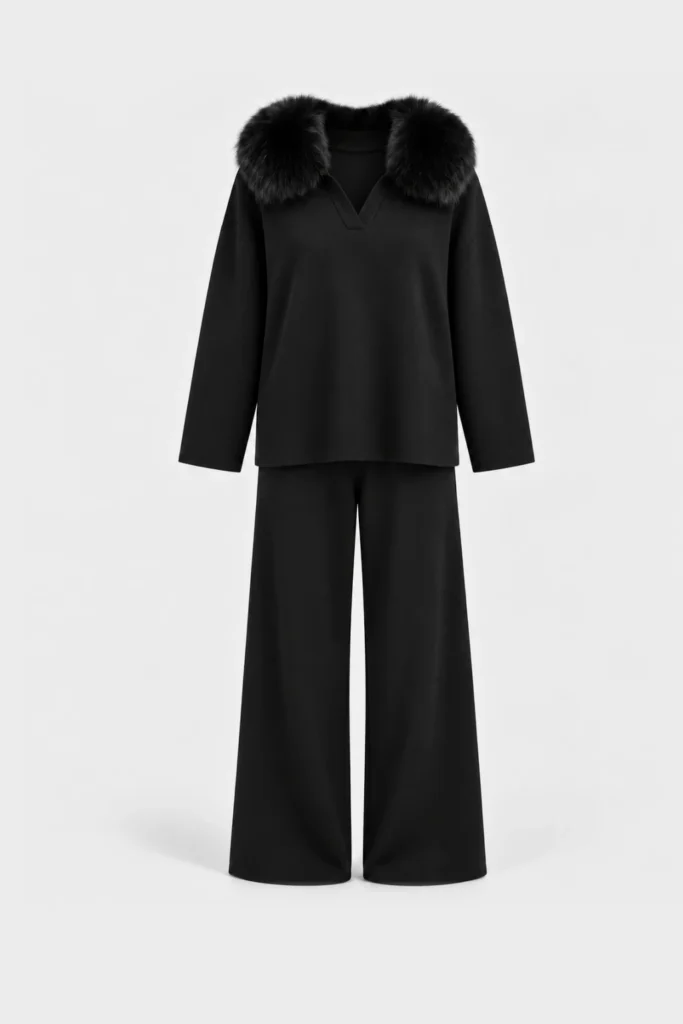
- The Fjell Collar Set has a large fox collar that is detachable, so the knit polo top and the wide-leg trousers can be cared for on their own.
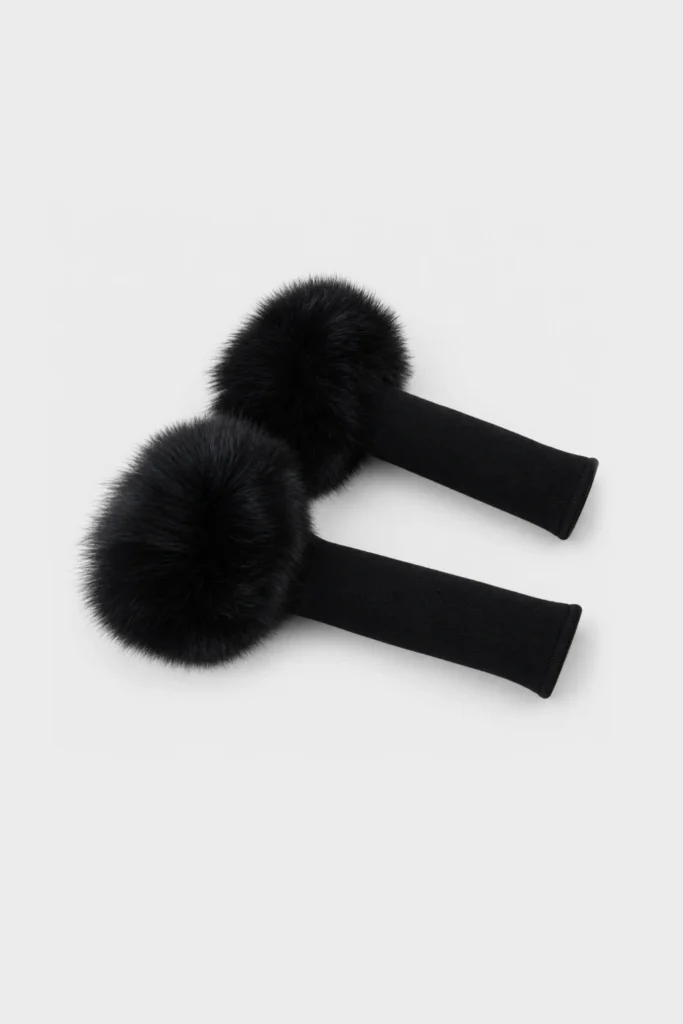
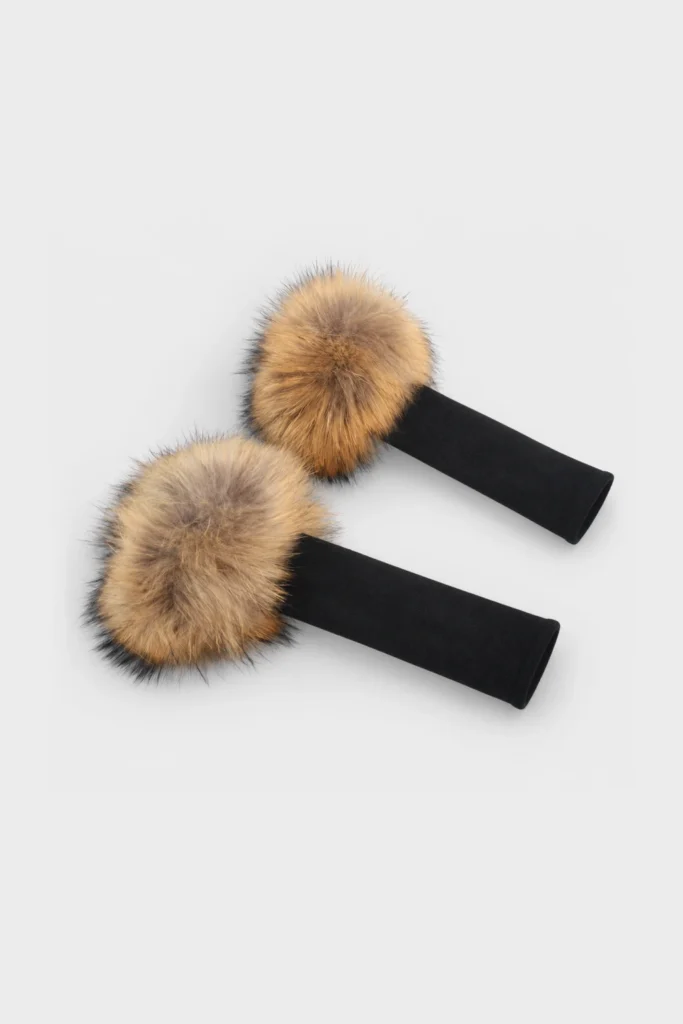
- The Vinter Knit Set has fox cuffs that fasten with a press stud, so you can remove them from the ribbed roll-neck.
- The Nordlys Down Jacket has a large detachable fox collar.
Remove the fur first, then follow the care label on the garment itself. Where the fur is sewn in, as on the Fjord Hooded Cardigan’s hood and the cuffs of the Tundra Wrap Jacket and Coat, the whole piece goes to a specialist.
If easy care is high on your list, the piece we would steer you towards is the Fjell Collar Set: a plain knit polo top and wide-leg trousers with a full fox collar that comes off when the knit needs care, and a set that is rated 4.9 by 46 customers.
How do you keep makeup off a fur collar?
Foundation on the collar is one of the most common small frustrations with fur, and there is no magic fix once it is there. Prevention is easy, though:
- Let your makeup set for a few minutes before you put the collar or hood on.
- Fasten the collar last and open it before you take the coat off, so it does not drag across your face.
- Choose a detachable collar for evenings when you are wearing a heavier base, so it can come off at dinner.
If makeup does get on the fur, don’t rub it in with a damp cloth. Let a specialist deal with it at the next clean.
Can you wear perfume and hairspray with fur?
Yes, as long as they go on before the fur does. The Fur Institute of Canada warns that perfume, hairspray and similar products “can dry the fur, remove its lustre, and make it sticky.” So spray your wrists and neck, let them dry, then put on the collar, hat or coat.
The same logic answers the question of smell. If a fur starts to smell musty, the Fur Institute is clear that “spraying it with cologne won’t fix the problem”: it needs airing, and if that is not enough, a specialist clean. A new piece may carry a faint smell from packing; a day or two of air in a cool room usually takes care of it.
Is shedding a sign you are doing something wrong?
Usually not. A few loose hairs in the first wears are normal, especially on fox and long-haired rabbit, and they settle down. Short furs such as rex rabbit and mink shed very little. A gentle shake outdoors after the first few wears helps a lot. Our full guide on does real fur shed explains what is normal for each fur and when to worry.
How long does real fur last?
With this kind of care, a long time. The Fur Institute describes fur as “extremely durable when cared for correctly”, and it is one of the reasons people choose real fur in the first place: a well-kept piece can be worn for decades and, at the end of its life, it is a natural material rather than plastic. Longevity also depends on the species: fox and mink are hardier, while rabbit is more delicate. If you want to understand how each fur behaves, our guide to the types of fur compares them side by side, and our fox fur page has the care notes for the fur we use most.
A real fur care checklist
- After wearing: shake, then hang on a padded hanger or rest on a shelf.
- If wet: shake, air-dry away from heat, no brushing until dry.
- Perfume and makeup: before the fur, never after.
- Bags: carry them away from fur collars and shoulders.
- Cleaning: a fur specialist, about once a year for pieces you wear a lot.
- Summer: clean first, then cool, dark, airy, and never in plastic.