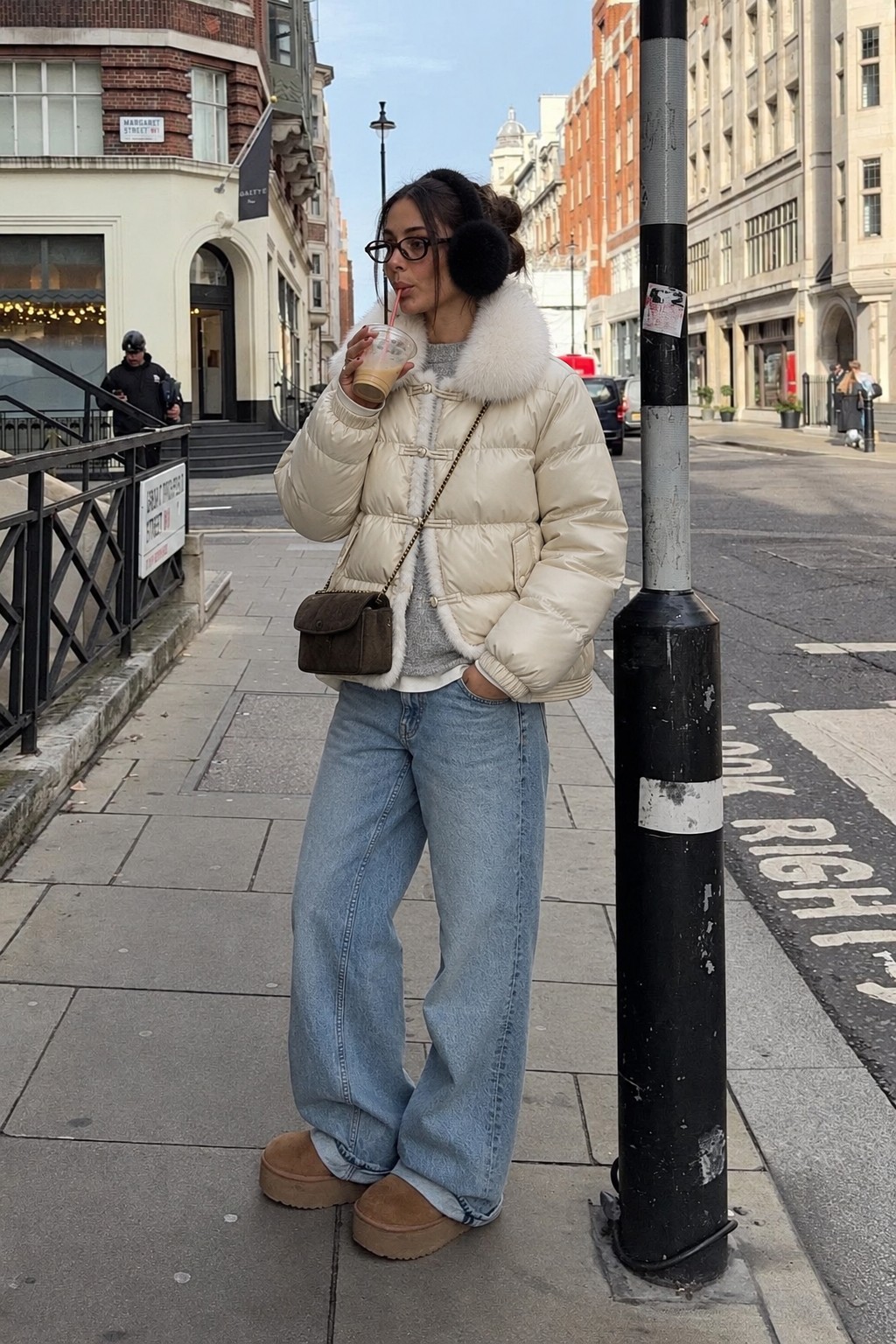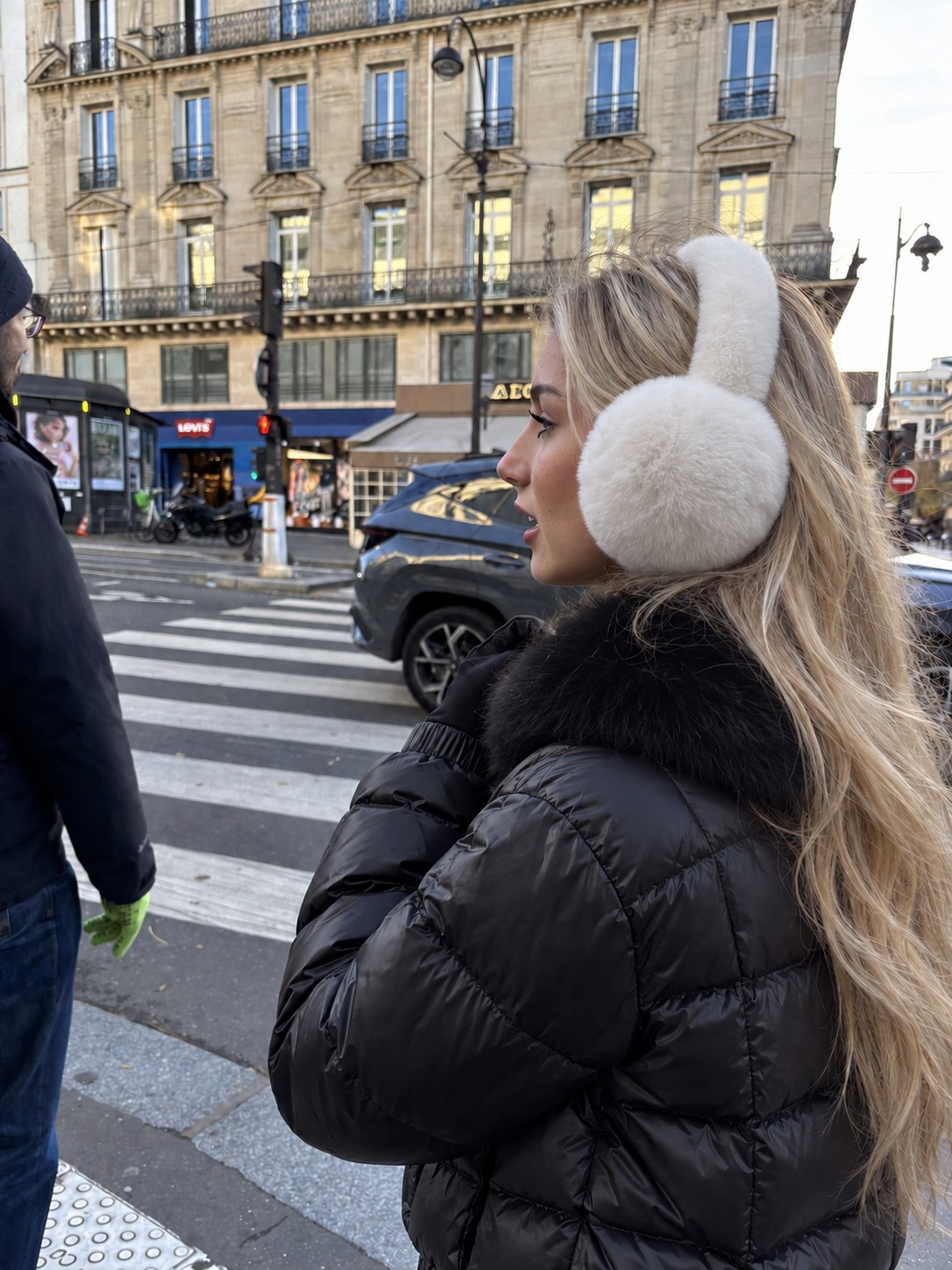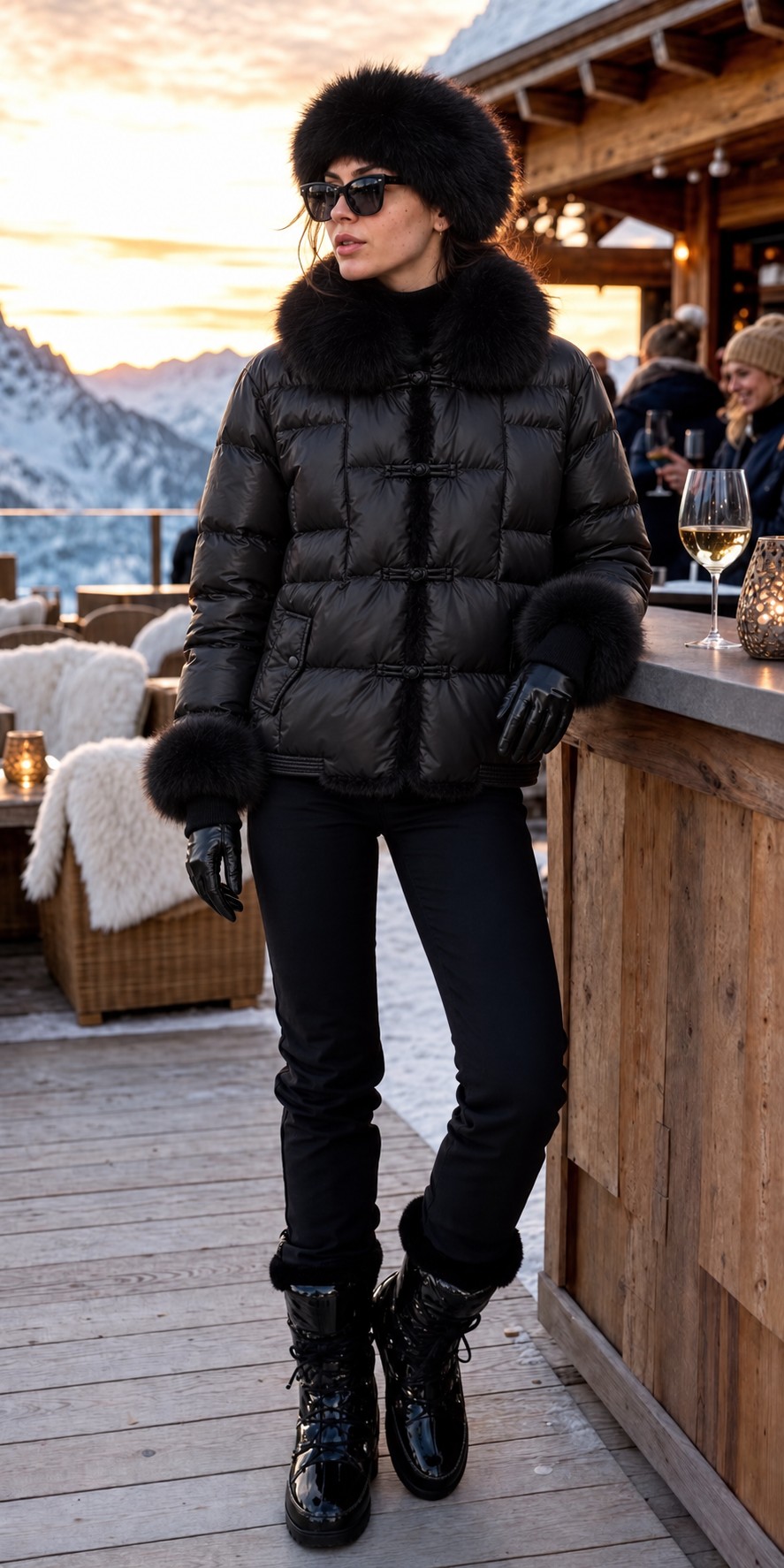
The best après-ski outfit is a soft knit base, a warm coat you can shrug off at the bar, one statement piece near your face and boots with a proper rubber grip. Think of it as city winter dressing with more texture: wide-leg knit trousers or slim jeans, a roll-neck, a wrap coat, and a fur hat, collar or cuffs that make the whole thing look deliberate.
What does après-ski actually involve?
Après-ski is everything after the last lift: the drink on the terrace at 4pm, the walk back through the village, dinner, and whatever comes after. Your outfit has to cope with all of it, from minus 10°C on the walk home to a packed, overheated bar.
So the first rule is simple: if the outfit only works with the coat on, it doesn’t work. Every layer underneath should look finished on its own, because you will spend half the evening without your outer layer.
The après-ski outfit formula
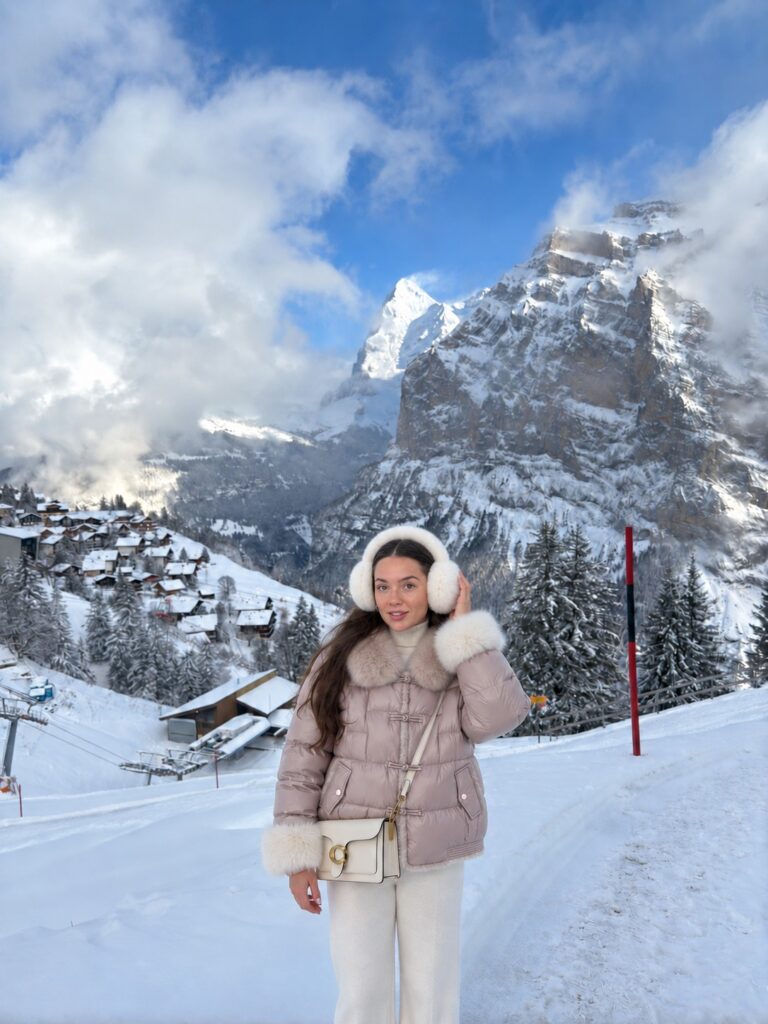
Almost every good après look breaks down into four parts:
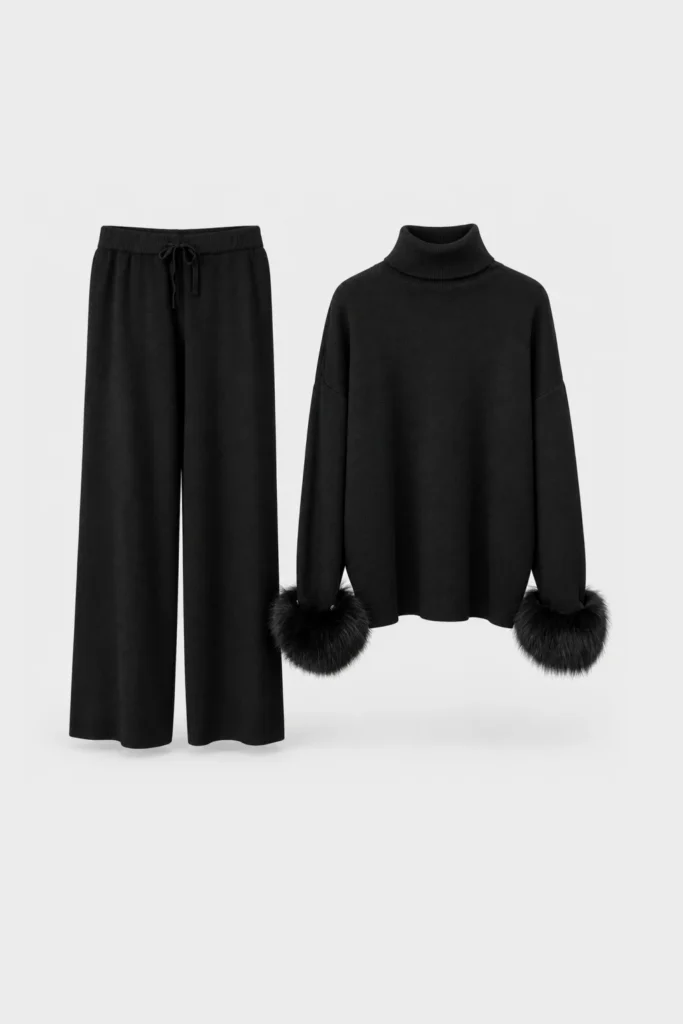
- A base that stands alone. A roll-neck, a fine knit or a matching knit set. Ivory, camel, grey and black are the easiest colours to build around.
- A warm layer you can remove. A wrap coat, a down jacket or a chunky cardigan. It should be easy to take off in a crowd, so think belts and zips rather than fiddly buttons.
- One statement near the face. A fur hat, a fur collar, earmuffs or fur cuffs. One, not three. This is the piece people remember.
- Boots that grip. Non-negotiable. More on this below.
Three day-to-night outfit formulas
- The terrace at 4pm
You are probably still in ski trousers, and that is fine. Swap the helmet for a fur hat, unzip the ski jacket and let a knit roll-neck show at the collar. Sunglasses stay on. The hat does the work: it turns technical kit into an outfit for the photo everyone takes on the terrace.
- The village walk and an early drink
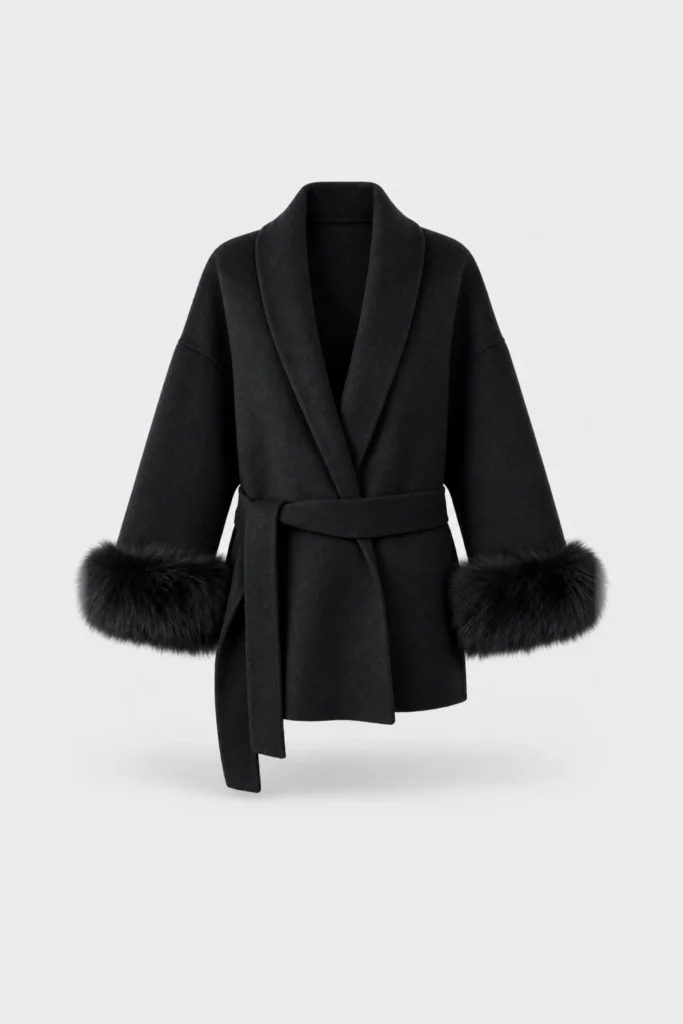
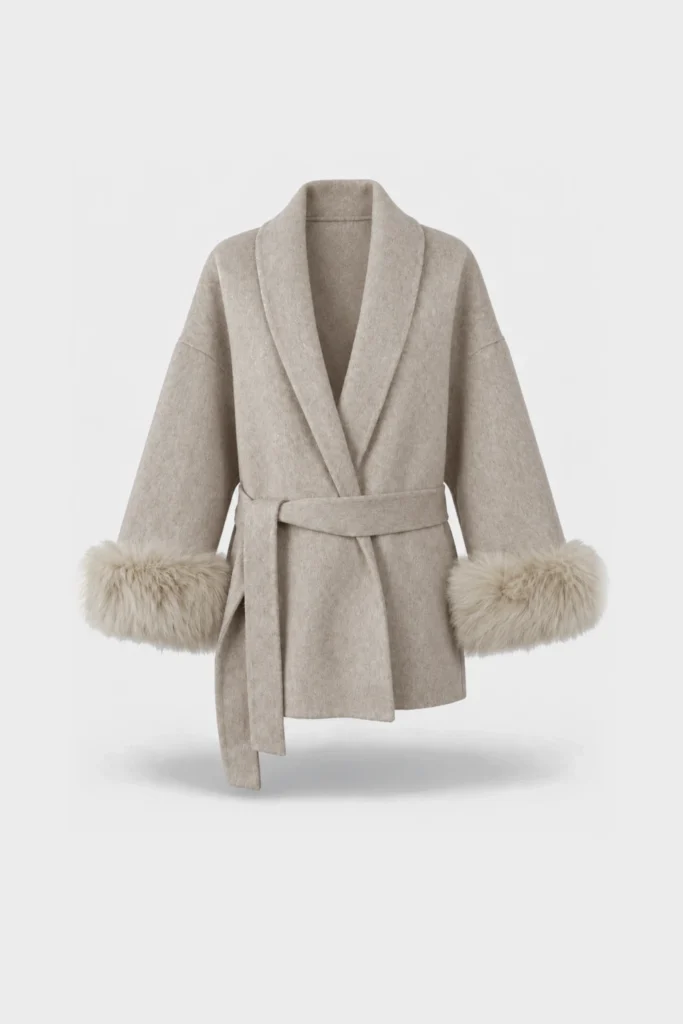
Change into a knit set or wide-leg trousers with a fine knit, then add a hip-length jacket. Our Tundra Wrap Jacket is cut to the upper thigh with a belt and a shawl collar, and the fur is only on the cuffs, so it reads polished rather than bulky. Add earmuffs or a slim fur headband if you want your hair to stay down.
- Dinner and beyond
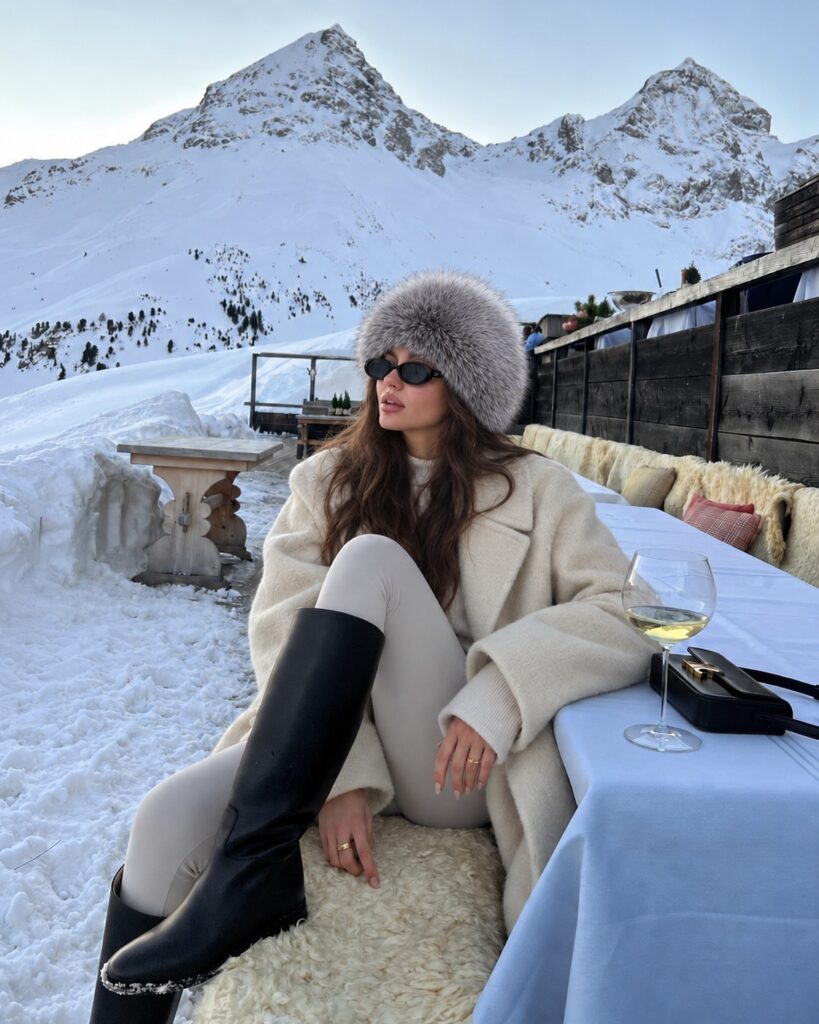
Go longer and quieter. A calf-length wrap coat over a matching knit set in one colour, a fur collar or the fur cuffs of the coat as your only texture, and small gold jewellery. Inside the restaurant, the coat comes off and the knit set has to carry the look on its own, so choose one with a detail at the neck or wrist.
What to wear après-ski in each resort
Every resort has its own dress code, even if nobody writes it down.
St. Moritz
The most traditional and the most glamorous. It hosted the Winter Olympics in 1928 and 1948, and in February it holds White Turf, horse racing on the frozen lake. Fur is at home here: a full fur hat, a long coat and dark sunglasses look normal rather than dressed up. Go for ivory, camel or black, and keep everything else simple.
Courchevel
Sleek and Parisian, especially at Courchevel 1850. Think monochrome: black on black, or cream on cream, with one luxurious texture. A tailored long coat and a fur collar suit the polished hotel bars better than anything novelty.
Verbier
Younger, livelier and more about the bar than the dining room. Knit sets, a cropped or hip-length jacket, colour and a bit of fun. This is where a pink fur hat or a patterned cardigan makes sense.
Kitzbühel
Austrian, cosy and proud of its medieval old town. The Hahnenkamm race in January brings the biggest crowds of the season. Lean into rich browns, loden greens and camel, with a chunky knit and a fur hat. The village sits low for a ski resort, at under 800 metres, so the cobbles can go from slush to ice overnight. Grip matters.
Zermatt
Car-free, so you walk everywhere, often uphill, with the Matterhorn in the background. Dress for the walk first: a warm hip-length jacket, a hat that covers your ears, and your best-gripping boots. Save the long coat for an evening when you take an electric taxi.
Val d’Isère
Sporty, high and very French. Après here often starts on the mountain with dancing at La Folie Douce, still in ski boots. Keep it practical: a fitted mid-layer, a fur headband or earmuffs that won’t fall off when you move, and a change of clothes for the village later.
What shoes should you wear après-ski on icy streets?
Wear insulated boots with a deep, lugged rubber sole. Packed snow on resort streets turns to polished ice by evening, and smooth leather soles and thin heels are what put people on the ground. If you want height, choose a chunky block heel of no more than about 4 cm with a rubber tread.
A few rules that save evenings:
- Check the sole, not the upper. Deep lugs and soft rubber that stays flexible in the cold.
- Carry slip-on ice grips. They fold into a coat pocket and go over your boots for the steep walk home.
- Bring indoor shoes to dinner if the restaurant is smart. A flat leather loafer in your bag is lighter than you think.
- Avoid suede in wet snow unless it is treated. Salted pavements leave tide marks.
Hat, headband or earmuffs?
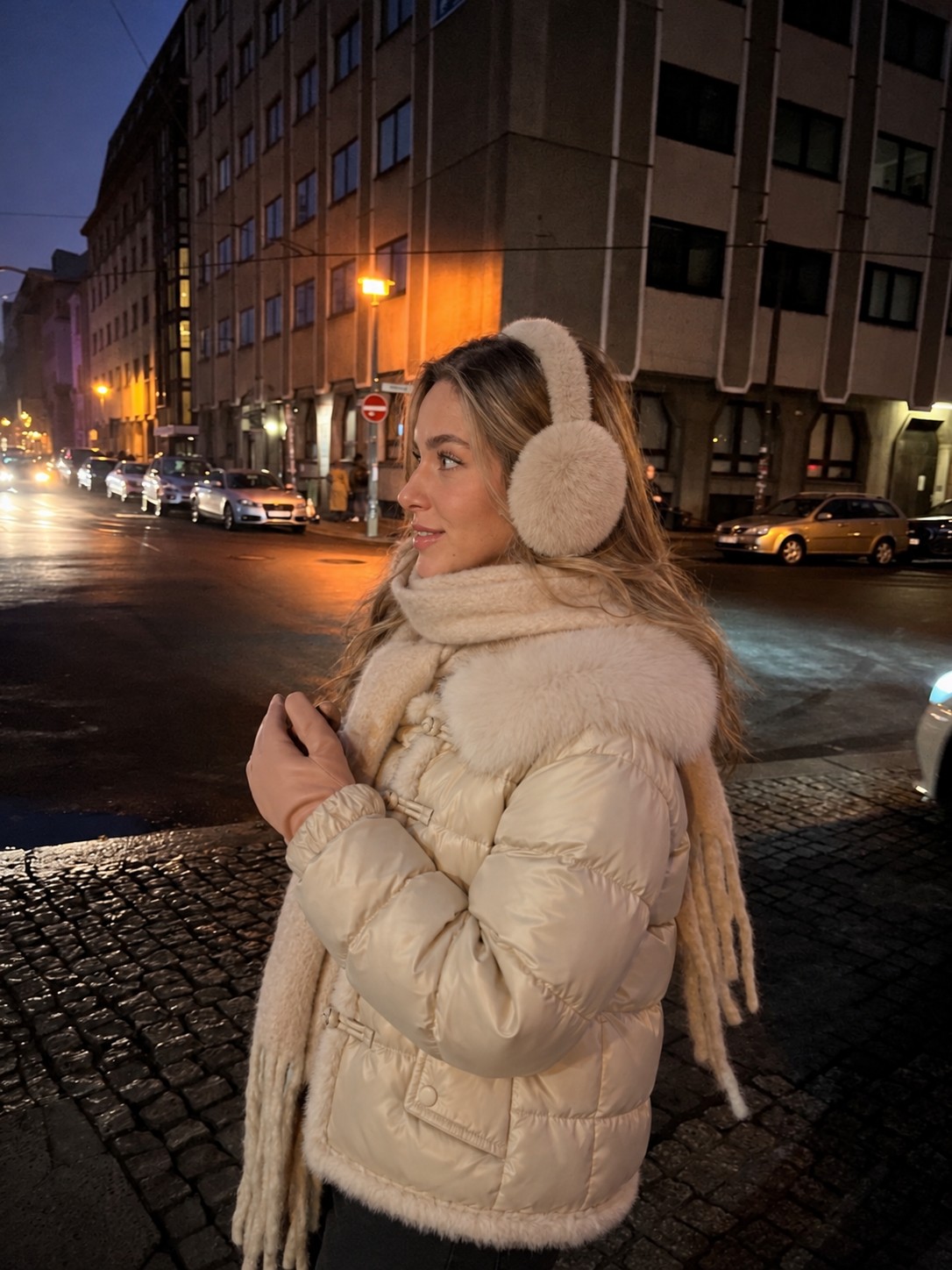
This is the one decision that changes the whole look. A fur hat is the most dramatic and the warmest for long walks. Earmuffs and fur headbands keep your hair visible and work better with a hood or ski helmet in your bag. We go through each one in detail in our après-ski hat guide and our guide to après-ski earmuffs and headbands.
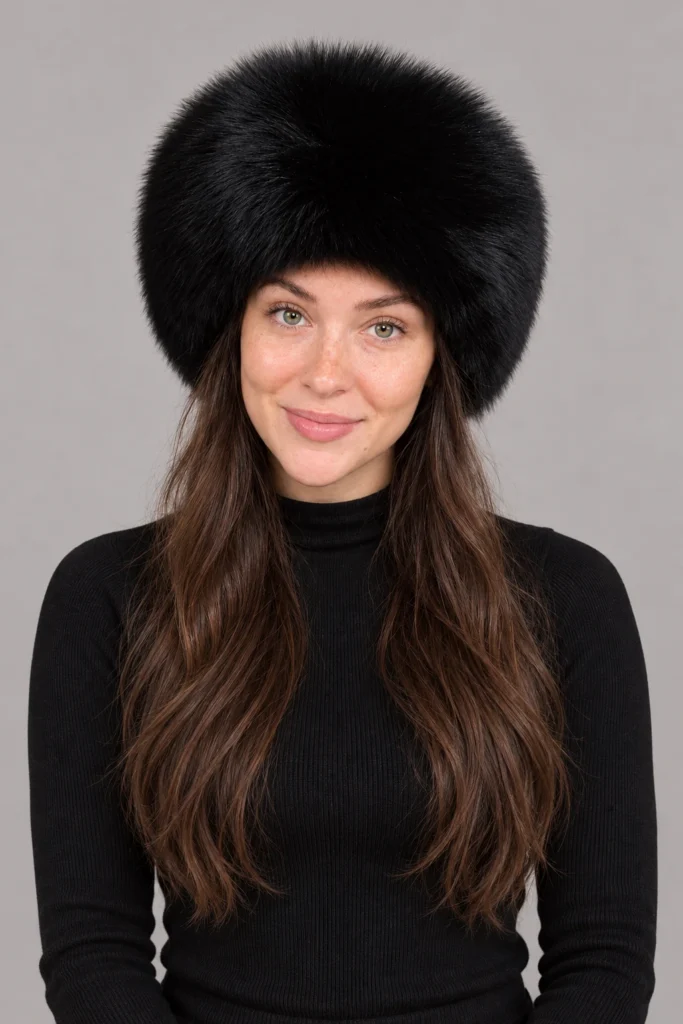
If you can only bring one statement piece, make it the hat. The piece we pack every time is the Svalbard Hat: a low, wide ring of fox fur around a panelled crown, with a quilted lining. It sits at the eyebrow and covers the ears, so it is warm enough for the walk home, and it is rated 4.9 by 43 customers. Fox has long guard hairs that let light snow be shaken off, which is why it suits the mountains so well. You can read more about how it behaves on our fox fur page.
What not to wear après-ski
- Too many statements at once. A fur hat, fur collar and fur boots together is a costume. Choose one.
- Anything you can’t take off easily. Fitted coats with ten buttons are a pain in a crowded bar.
- Thin tights and heels. You will be cold and you will slip.
- A heavy scarf plus a fur collar. Pick one; layering both looks bulky and feels too hot indoors.
How to pack for a week of après-ski
For seven nights, pack two knit bases (one matching set and one roll-neck), one pair of wide-leg trousers, one pair of dark jeans, a warm hip-length jacket, a longer coat for dinners, one fur statement piece, snow boots and indoor shoes. Repeat the bases with different layers and nobody will notice.
If you are staying in a chalet rather than a hotel, the evening dress code changes again: softer, more relaxed, and built around the fire. We cover that in what to wear in a chalet. And if the look you want is quiet, heritage and unbranded, start with our old money après-ski edit.