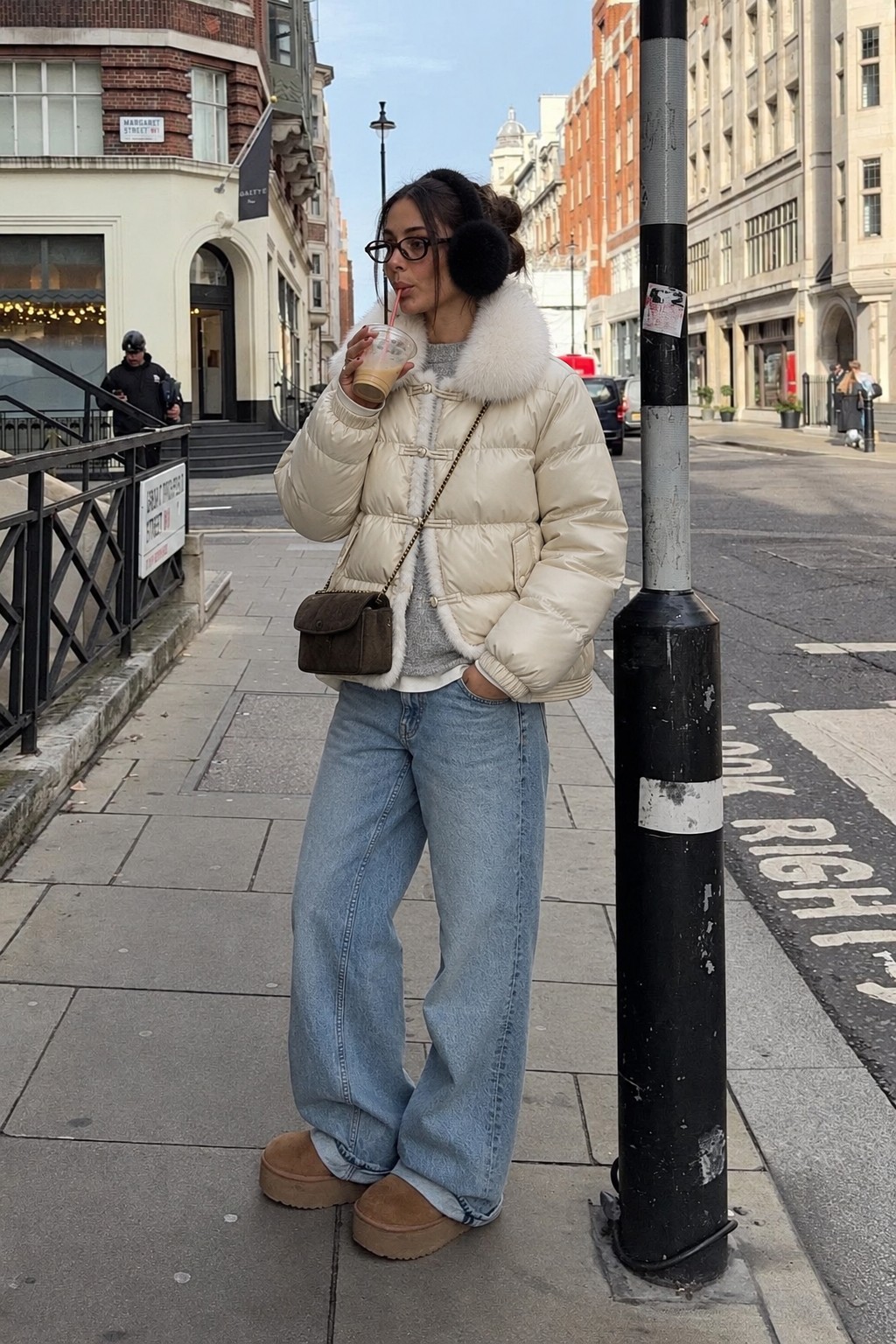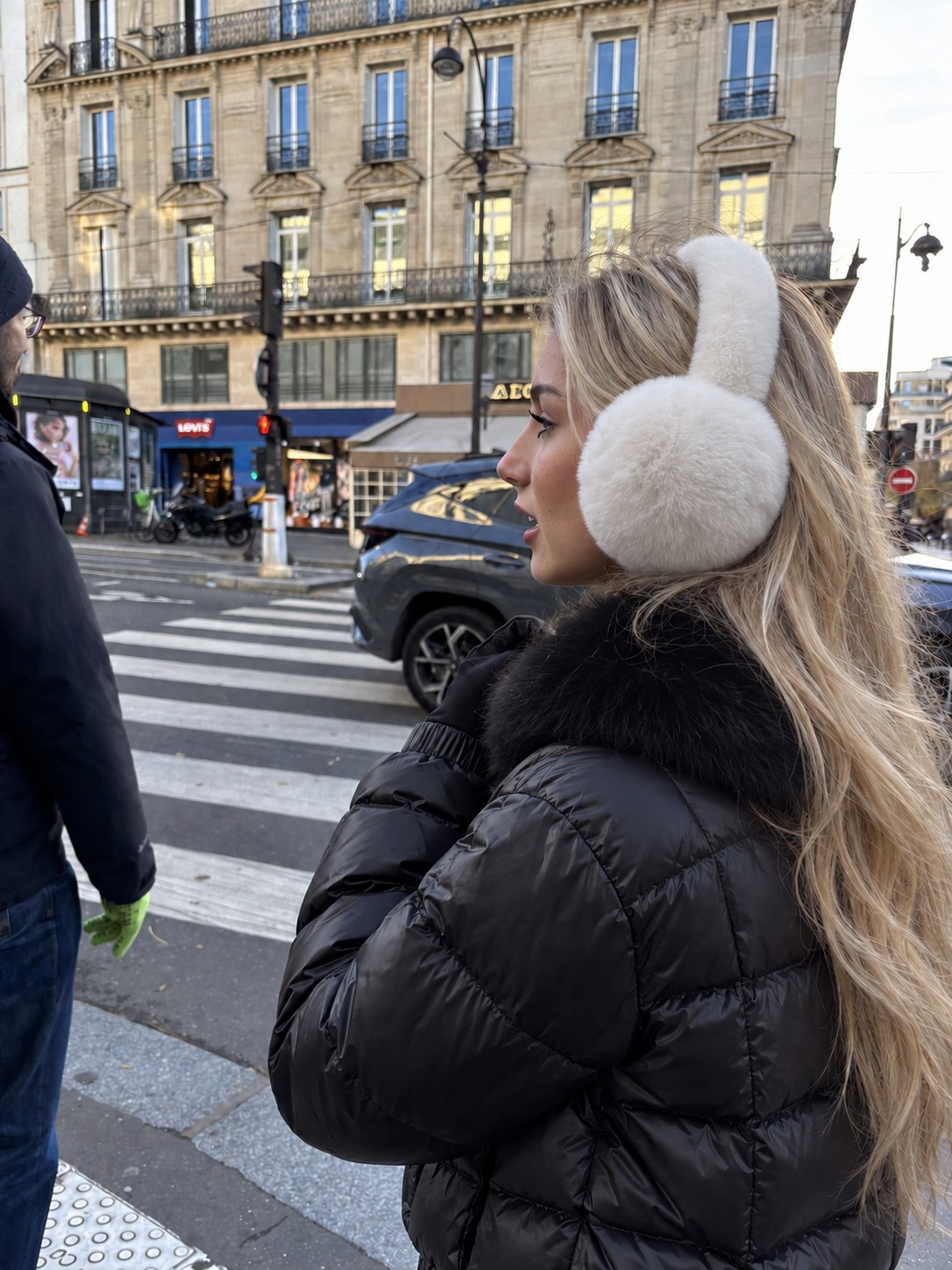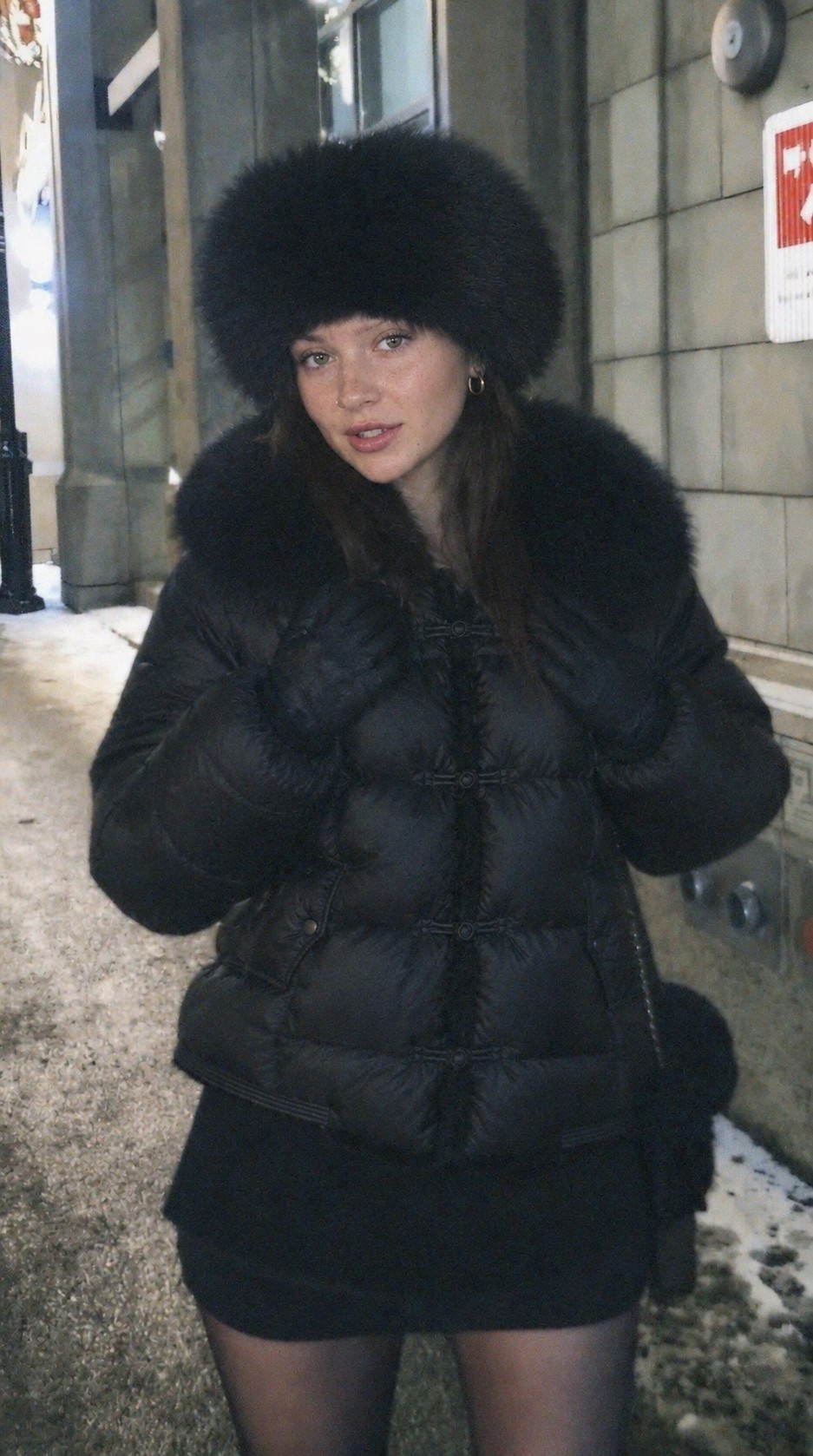
The best hat for an après-ski outfit is a low, wide fur hat: it is warmer than a beanie, it frames your face and it turns ski kit into an outfit in one move. A beanie still has its place on the lift, and a fur headband works when you want your hair on show, but for the terrace, the village walk and the photo, fur wins.
Fur hat, beanie or headband: which is best for après-ski?
Each one does a different job, so it helps to be clear about what you need from the evening.
- Fur hat. The warmest and the most dramatic. It covers your ears and forehead, which matters on a walk home at minus 10°C. It flattens your hair, so plan for that.
- Beanie. Practical, packable and fine on the mountain. Off the slopes it tends to read as “I haven’t changed yet”, and a thin knit lets the wind straight through.
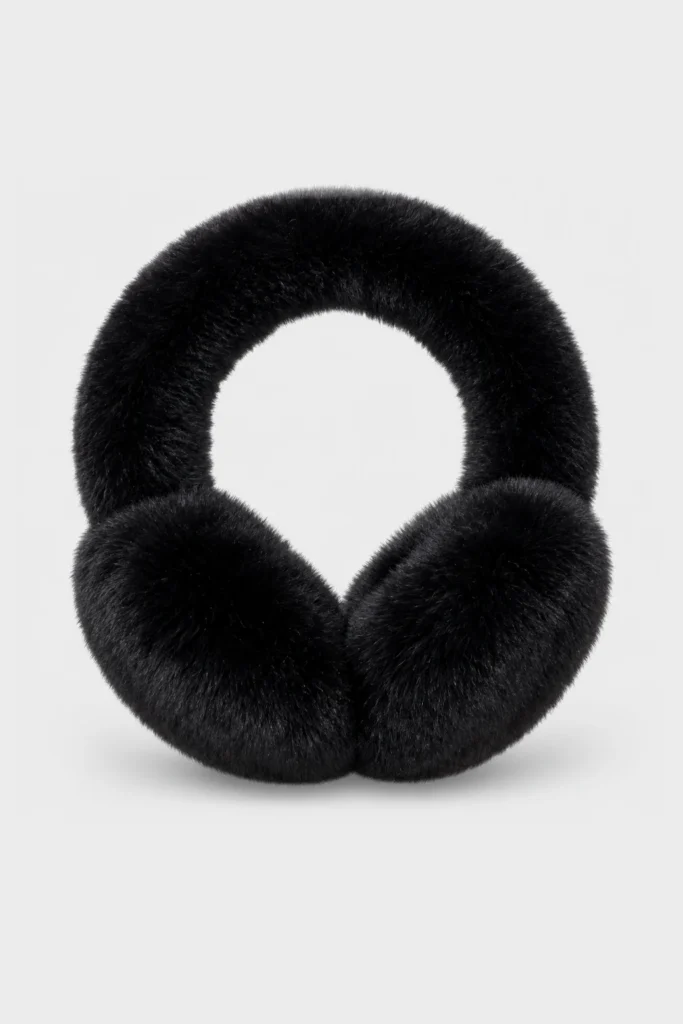
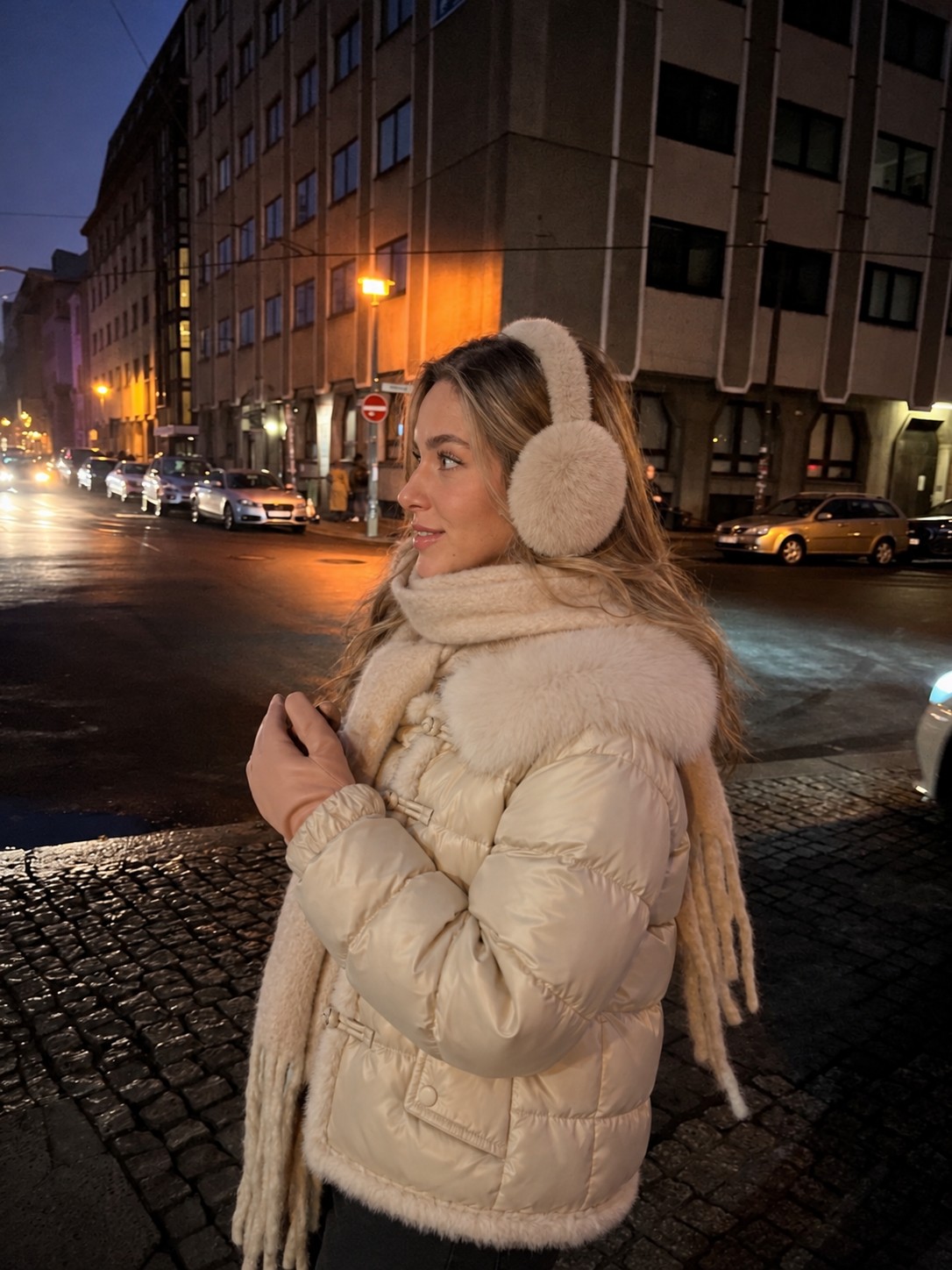
- Fur headband or earmuffs. Keeps your ears warm and your hair visible, and fits in a coat pocket. Less warm on top of the head, so better for short walks and busy bars.
For a full evening that starts outdoors and ends at dinner, the fur hat is the one that covers every part of it. Earmuffs and headbands have their own guide: see après-ski earmuffs and headbands.
Why a low, wide fur hat flatters almost every face
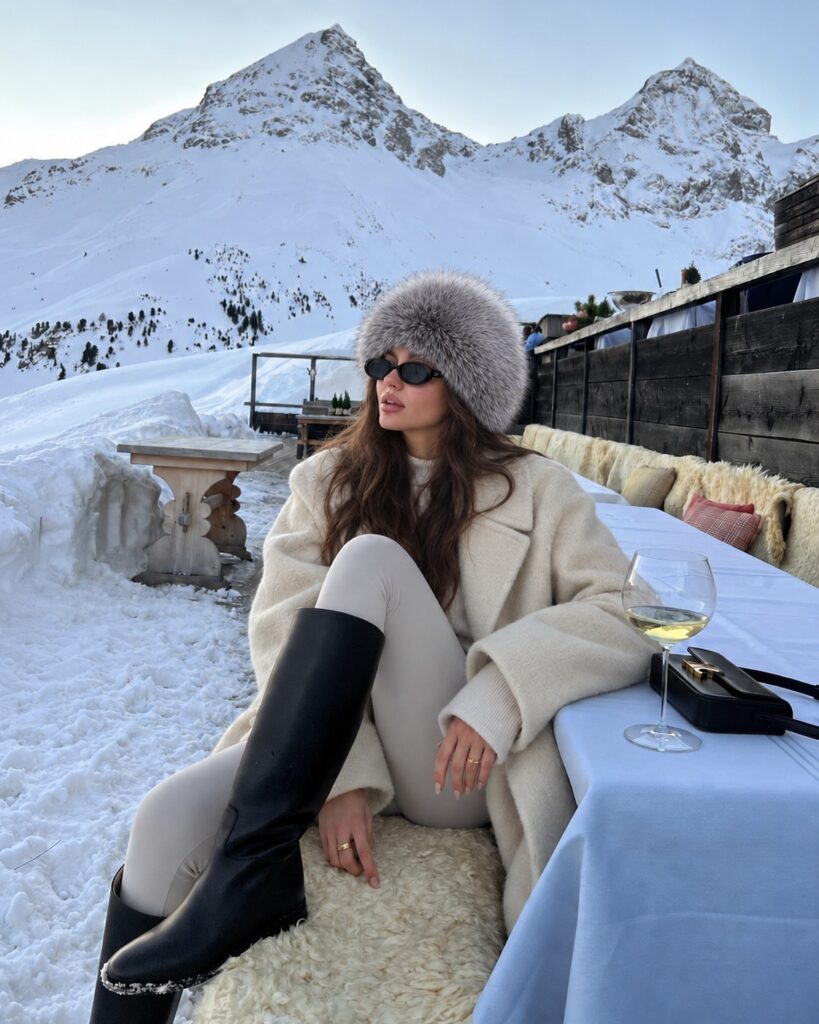
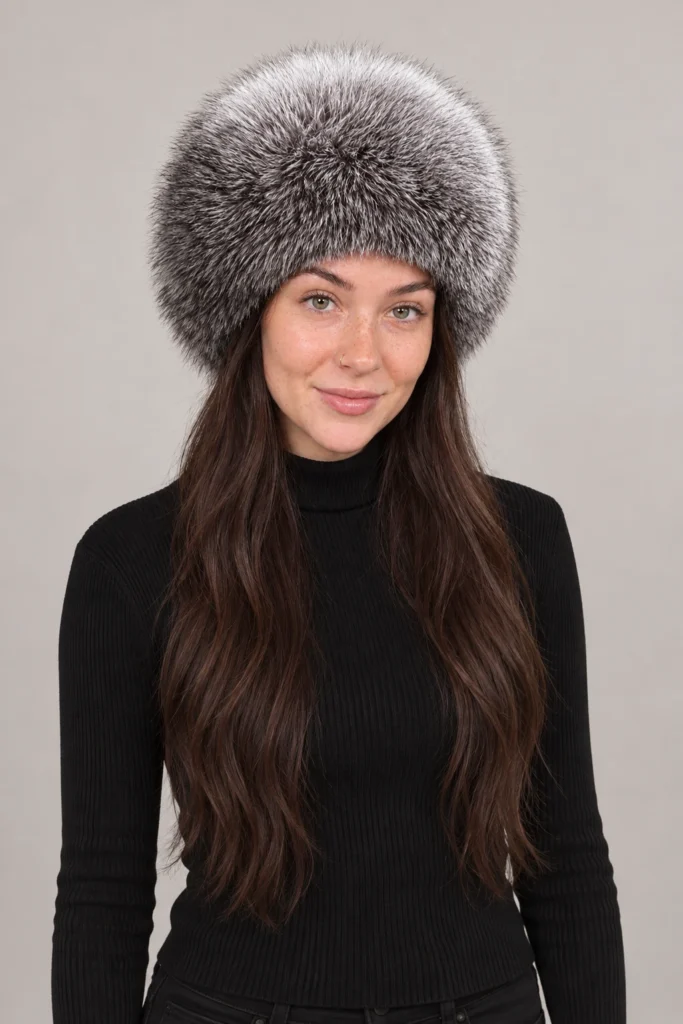
The shape matters more than the fur. A tall, narrow hat makes the face look longer and the head look small. A low, wide hat does the opposite: it puts soft volume at the sides of the face, at cheekbone height, and draws the eye to your eyes.
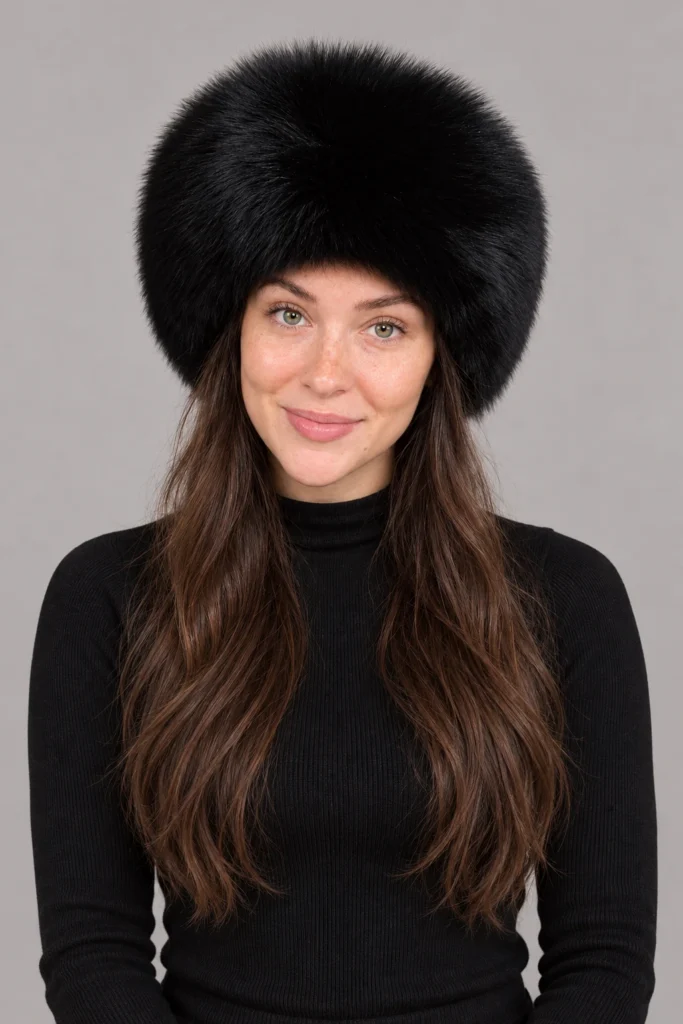
Our Svalbard Hat is a good example of the proportions that work. It is a low dome with a thick ring of fox fur around a panelled crown, and it is roughly four times as wide as the distance from your eyes to your mouth. The brim sits at the eyebrow and the fur covers the ears. That width is what makes it frame the face rather than sit on top of it.
A few rules for the most flattering fit:
- Wear it low. The brim should touch your eyebrows. Pushed back, a fur hat looks like it is about to fall off.
- Let a little hair show. A few loose strands at the temples, or hair down at the back, softens the line.
- Go lighter near the face if you are fair. White, silver and pink reflect light onto the skin. Black is striking against dark hair and a red lip.
- Skip big earrings. The fur already covers your ears. A small stud or nothing at all.
How to wear a fur hat with your après-ski outfit
Three formulas that never fail:
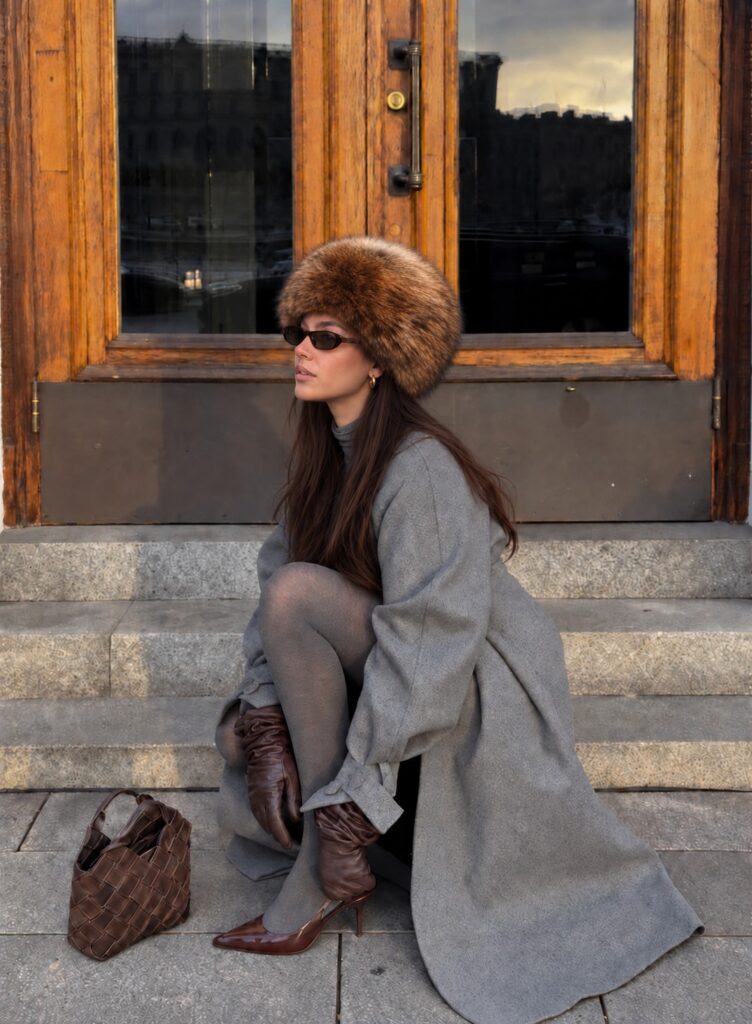
- Straight off the slopes. Ski trousers, an unzipped ski jacket, a cream roll-neck showing at the neck and a fur hat. Sunglasses on. This is the 4pm terrace look.
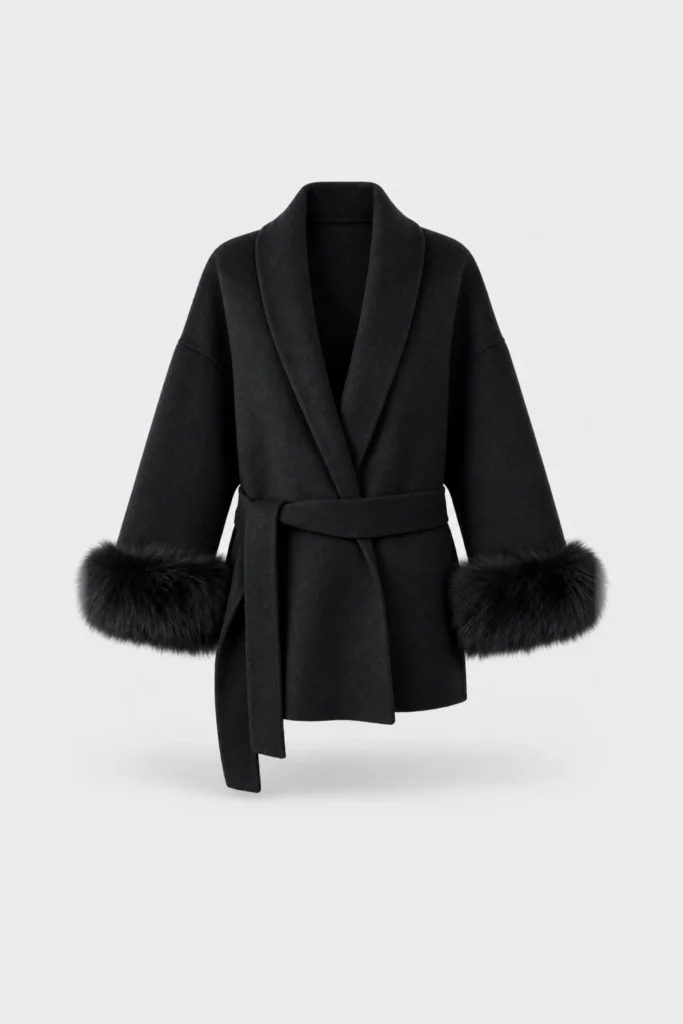
- The village walk. Wide-leg knit trousers, a matching knit top and a belted wrap jacket in the same colour family, with the hat in a slightly lighter or darker tone.
- Dinner. A long camel or black coat, a fine knit, dark jeans or tailored trousers, and the hat until you sit down. It comes off at the table, so make sure your hair survives: a low ponytail or loose waves recover best.
For more ideas off the mountain, our guide on how to style a fur hat covers city outfits too.
Which colour fur hat should you choose?
Match the hat to your coat or to your hair, not to your ski jacket. Ski jackets change; coats and hair don’t.
- Black: the most versatile, and the sharpest with black, grey or camel.
- Natural: a warm, golden fox with darker tips. On our Svalbard it comes with a black crown. Lovely with camel, brown and ivory.
- Silver: a cool grey fox on a darker base. Beautiful with grey, navy and black coats.
- White: pure snow. Striking with ivory and camel, and very photogenic on a sunny terrace.
- Pink: a pale baby pink with near-white tips. The playful choice for Verbier or Val d’Isère.
From behind, the Svalbard has a buckle strap and two thin cords with fur pompoms, which is the detail people notice when you walk ahead of them up the street.
When is a beanie the better choice?
On the mountain itself, under or instead of a helmet, a beanie is the right call. It also makes sense in heavy wet snow if you are out for hours, and on very windy lift queues when you want something that cannot blow off. Keep a thin merino beanie in your ski jacket pocket and change into the fur hat at the bottom of the last run.
How do you look after a fur hat in the mountains?
Fox fur is well suited to snow. The Fur Institute of Canada notes that fur with lots of guard hairs does not need to fear rain, and Day Furs says mild rain or snow will not damage fur. When you come in:
- Shake the hat gently outside.
- Rest it on a bowl or a rolled towel at room temperature to dry.
- Keep it away from radiators, ski-boot heaters and the fire. The French fur house Yves Salomon is clear: never use a hair dryer or radiator.
- Keep hairspray and perfume off the fur.
You can read more about how fox behaves on our fox fur page.
The fur hat we would pack
If you are bringing one hat for the whole week, our pick is the Svalbard Hat. It has a quilted lining, so it is warm on the walk home without being heavy, and it is rated 4.9 by 43 customers. Pair it with a plain coat and it does all the talking.
Common après-ski hat mistakes
- Fur hat plus fur collar plus fur boots. One fur near the face is enough.
- Wearing it too high. Low at the brow, always.
- Choosing it to match the ski jacket. Match the coat you will wear at night.
- Drying it on the radiator. It dries out the leather.
For the full outfit around the hat, from terrace to dinner, see our complete guide on what to wear après-ski.