Yes, fox fur is legal in the UK: you can buy it, sell it, import it and wear it, as of October 2026. What the UK bans is fur farming, which has been illegal across England, Wales, Scotland and Northern Ireland since the early 2000s, while there is still no ban on importing or selling fox fur.
That said, there has been plenty of news on the subject: a parliamentary debate, government reports and a strong campaign for an import ban. Here is where things actually stand, with sources, so you know exactly what the law says.
Is it legal to buy and wear fox fur in the UK?
Yes. No UK law makes it an offence to own or wear fox fur, and fox fur products can be legally sold in shops and online.
The House of Commons Library, which writes neutral briefings for MPs, confirms in its March 2026 debate briefing (CBP-10546) that fur imports remain legal, including fur from farmed animals and from wild-trapped animals. Even the campaign group Humane World for Animals, which wants a ban, states in its October 2026 release that fur from foxes, mink, raccoon dogs, coyotes and rabbits “can still be imported and sold” (Humane World for Animals UK).

When was fur farming banned in the UK?
Fur farming is banned in all four nations, under three separate laws:
- England and Wales: the Fur Farming (Prohibition) Act 2000, which received Royal Assent on 23 November 2000.
- Scotland: the Fur Farming (Prohibition) (Scotland) Act 2002.
- Northern Ireland: the Fur Farming (Prohibition) (Northern Ireland) Order 2002.
The prohibitions took effect on 1 January 2003, so you will see “banned since 2000” and “banned since 2003” both quoted, and both are correct in their way. Sources: the Commons Library briefing above, and the Wikipedia summary of the 2000 Act.
Importantly, these laws only stop fur farms operating in the UK. They say nothing about buying, selling or wearing fur.
Is the UK going to ban fox fur imports and sales?
Not yet, and no ban has been announced. Here is the timeline:
- 2021: Defra, with the Scottish and Welsh governments, ran a call for evidence on the fur market in Great Britain. It received almost 30,000 responses.
- December 2025: the government’s Animal Welfare Strategy committed to convene a working group on fur, engage with the EU, and publish the 2021 results and an Animal Welfare Committee report. It did not commit to a ban (Fur Free Britain).
- 10 March 2026: MPs debated the import and sale of fur in Westminster Hall, in a debate opened by Ruth Jones MP. According to Fur Free Britain, the Defra minister, Angela Eagle MP, repeated the commitment to set up a working group. The debate is recorded on TheyWorkForYou.
- 26 March 2026: the government published the Animal Welfare Committee’s opinion on the responsible sourcing of fur on GOV.UK, together with the summary of responses to the 2021 call for evidence.
- April 2026: reports said ministers would not use post-Brexit powers to ban fur imports while the UK negotiates its agreement with the EU, and would set up the working group instead (The Animal Reader).
- 19 May 2026: more than 50 MPs and peers wrote to the Defra Secretary of State asking for the working group to be convened “without delay”, which suggests it had not met by then (letter published by Adrian Ramsay MP).
There is also a private member’s bill, the Fur (Import and Sale) Bill, introduced by Ruth Jones MP. Private members’ bills rarely become law without government support, and this one has not been passed.

What is the Fur Free Britain campaign?
Fur Free Britain is the campaign, led by Humane World for Animals UK, for a ban on fur imports and sales. It says its petition has more than 1.5 million signatures and that more than 200 MPs back it. It is a campaign, not a law: nothing it calls for is in force.
Which furs are already banned in the UK?
A few specific furs are restricted, regardless of the fox question:
- Cat and dog fur: banned from import, export and being placed on the market. Trading Standards’ Business Companion guide lists selling, importing or exporting cat and dog fur as an offence (Business Companion).
- Seal products: only allowed in very limited circumstances, such as products from traditional Inuit hunts (GOV.UK).
- Endangered species: fur from species protected under CITES needs the right permits.
Fox, rabbit and mink are not on that list.
What do UK fur labelling rules say?
If a garment is a textile product with fur on it, such as a wool coat with fox cuffs or a knit with a fox collar, the label must say it “contains non-textile parts of animal origin”. This comes from EU Regulation 1007/2011, which the UK has kept as assimilated law alongside the Textile Products (Labelling and Fibre Composition) Regulations 2012. Business Companion also notes that labelling real fur as faux fur is an offence.
Can you travel to Switzerland or the EU with fox fur?
Yes. Within the EU, fox fur is legal to buy, sell and wear. The EU bans cat and dog fur, and a number of EU countries ban fur farming, but there is no EU ban on selling or wearing fox fur. The European Commission’s page on the Fur Free Europe citizens’ initiative lists a possible ban among the options it is considering, but no legislative proposal (European Commission).
Switzerland has stricter rules for sellers. Since 2013, fur sold in Switzerland must be labelled as real fur with the species, its Latin name, the country of origin and how it was obtained, and since 1 July 2025 Switzerland has banned imports of fur produced by cruel methods, with transition periods (Swiss Federal Food Safety and Veterinary Office). According to the Swiss animal law foundation Tier im Recht, the import ban does not apply to fur products imported for personal use or as relocation goods (Tier im Recht). So a fox-fur hat on your head on the way to Zermatt is fine.

So can I wear my fox fur in London this winter?
Yes, with a clear conscience as far as the law goes. Whether you wear it is a personal choice, and our article is it OK to wear real fur? covers the ethical arguments calmly, while real fur vs faux fur compares the two materials on warmth, lifespan and the environment.
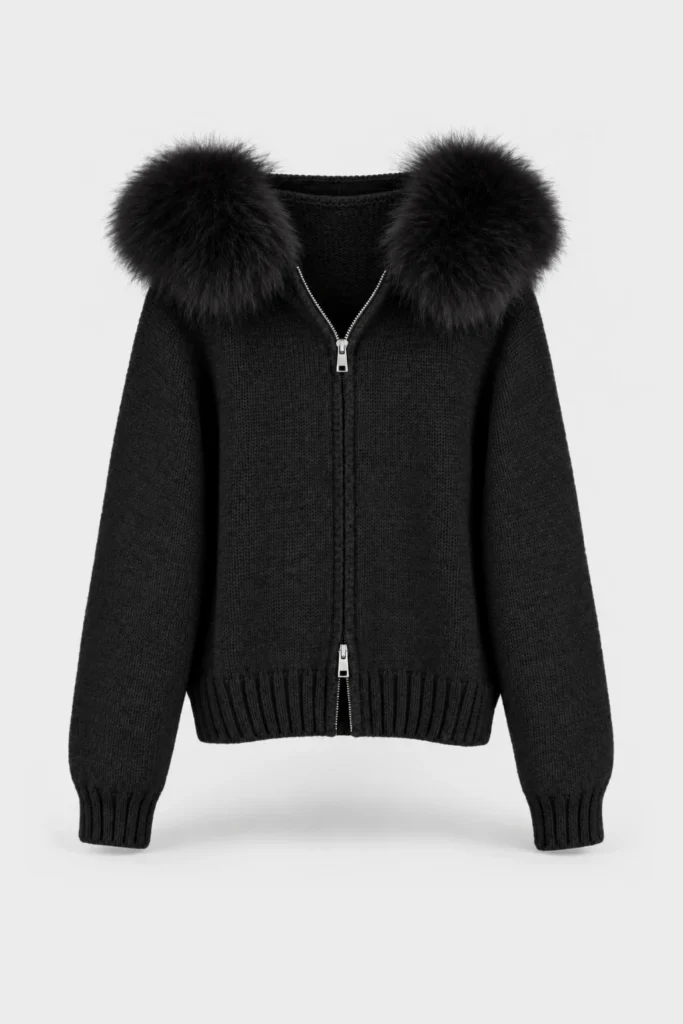
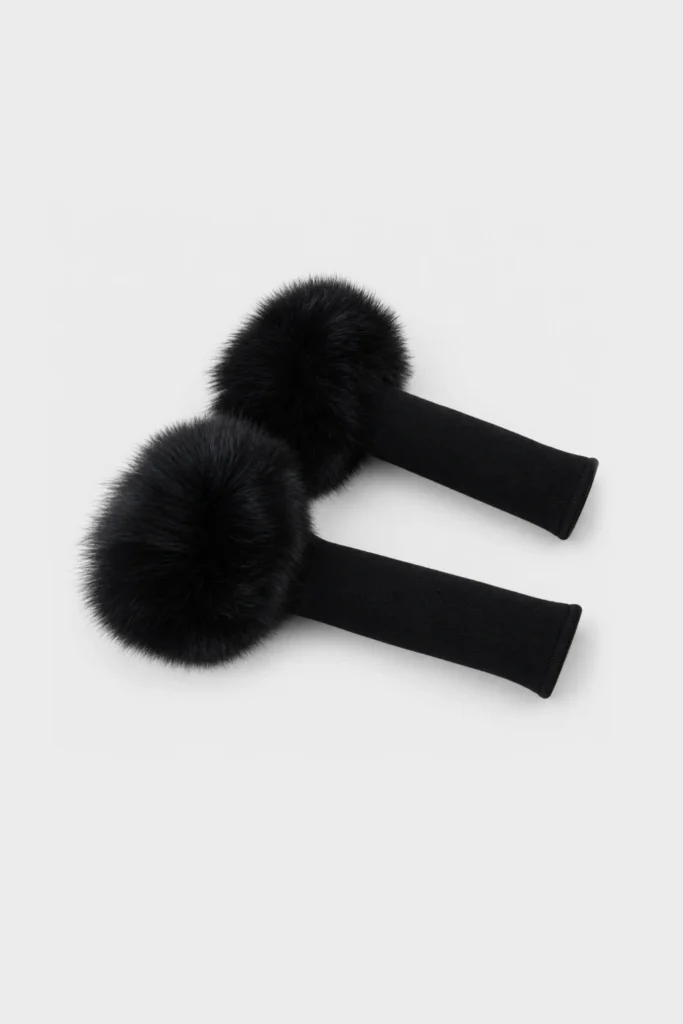
If you are looking for a first piece that suits British weather, the one we would choose is the Fjord Hooded Cardigan. It is a chunky knit with a two-way zip and a big fox-fur frame around the hood, and fox copes well with drizzle: the Fur Institute of Canada says that if your fur has lots of guard hairs, you need not fear the rain. It falls to the hip, it has no pockets, so it keeps a clean line, and it is rated 4.9 by 52 customers. Our fox fur page explains more about how the fur behaves.