To tell if fur is real, part the hairs and look at the base: real fur grows from a thin layer of leather, while faux fur is attached to a woven or knitted fabric. Then check the tips, because real hairs taper to a fine point while synthetic fibres are usually cut blunt.
Those two checks settle almost every case, and you can do both in a shop in under ten seconds. Below are seven checks in order, from the most reliable to the last resort, plus a few things that do not tell you as much as people think.
Why is it hard to tell real fur from faux?
Because faux fur has become very good, and labels are not always reliable. Verbraucherzentrale Hamburg, the German consumer advice centre, writes that telling real from faux fur “is often only possible with difficulty” and that fur declaration in Germany is poor. In South Tyrol, the consumer centre Verbraucherzentrale Südtirol reported that most of the items it tested were wrongly labelled. That is why it is worth knowing how to check for yourself.

- Part the hairs and look at the base
This is the most reliable check. Blow gently or part the fur with your fingers until you can see where the hairs come from.
- Real fur: a thin, soft skin, like suede or fine leather. On the inside of a trim you may also see the leather side.
- Faux fur: a fabric grid, with threads in rows, like the back of a carpet or a jumper.
Yves Salomon, the French fur house, calls the base “the most reliable method” of telling them apart, and Verbraucherzentrale Hamburg gives the same advice: with real fur you see the animal skin or leather, with faux fur a textile weave.
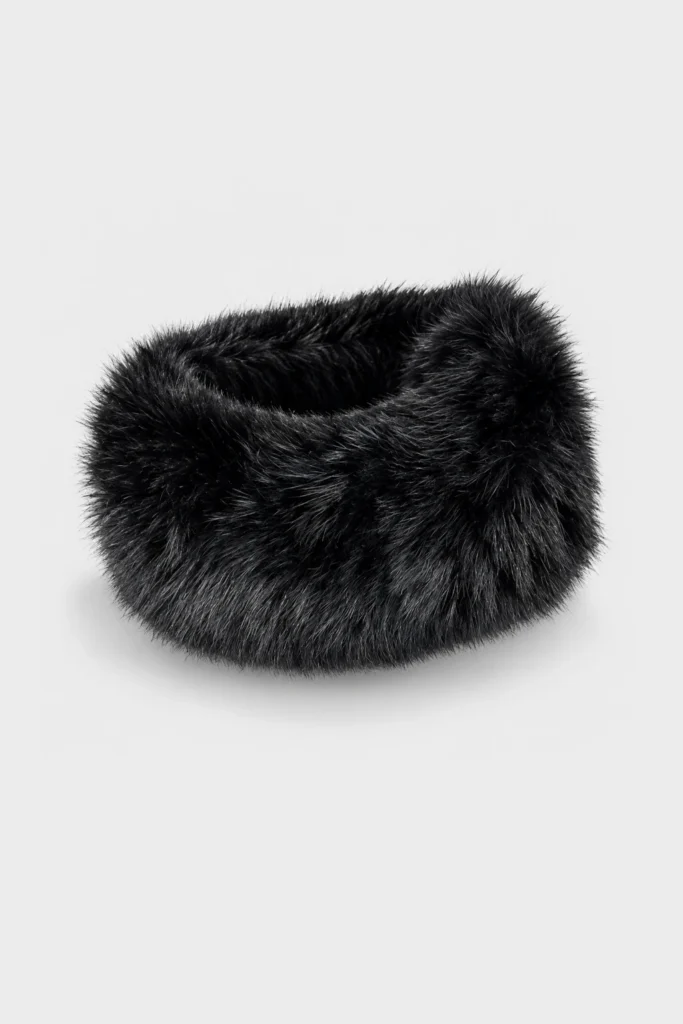
One twist worth knowing. On knitted fur, such as our Lumi Collar, the base is made of narrow strips of rabbit pelt knitted together in rows. Part it and you see strips of skin, not woven threads, but the rows can make it look knitted at first glance. Look closely at a single strip.
- Look at the tips of the hairs
Pinch a few hairs and look at the ends in good light.
- Real fur: each hair thins gradually to a fine point.
- Faux fur: fibres are usually the same thickness all the way and end bluntly, as if cut with scissors.
This works best on long furs such as fox. On sheared fur and rex rabbit the hairs are short, so you will need to look closely, ideally with your phone’s magnifier.

- Feel for underfur
Real fur usually has two layers: longer, glossy guard hairs on top and a short, dense, woolly underfur beneath. Push your fingers in and you feel a soft cushion near the skin.
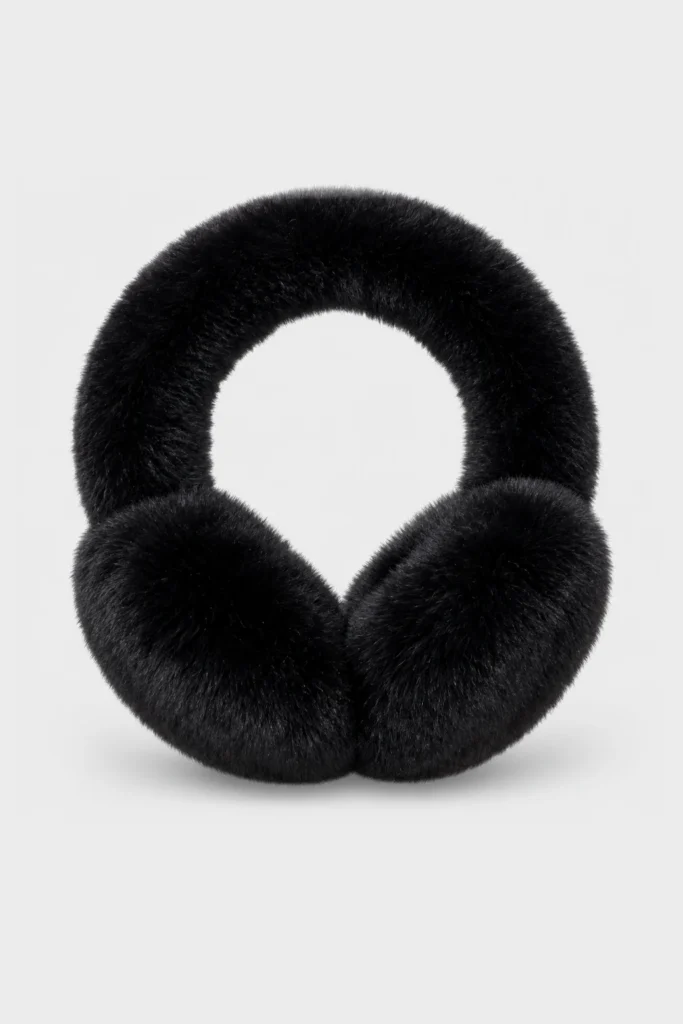
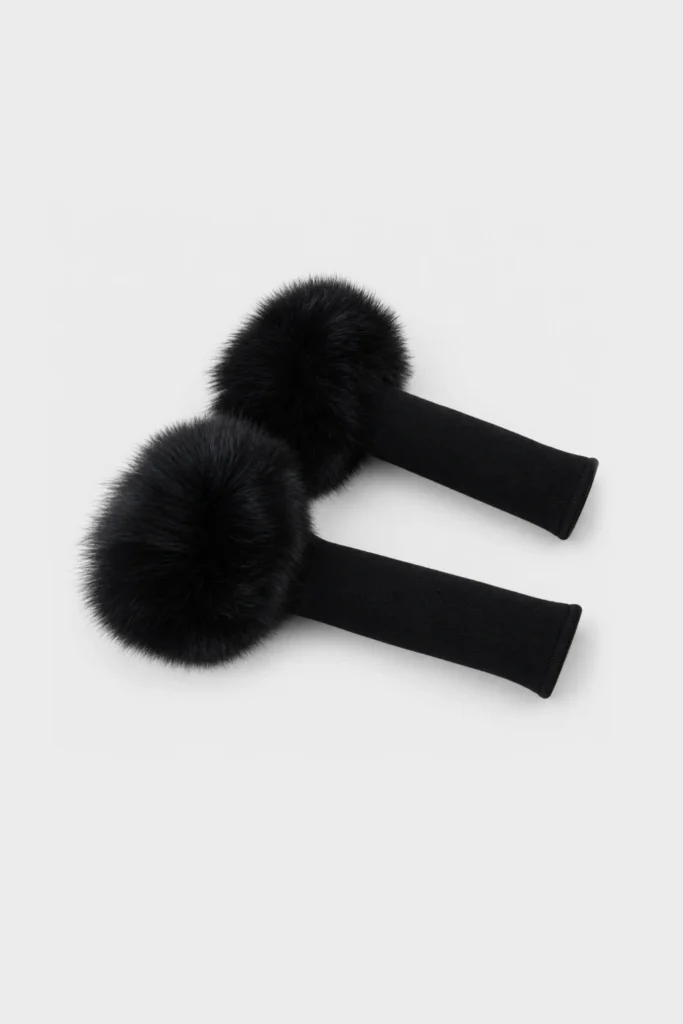
Fox shows this clearly. Our Frost Cuffs, for example, have long guard hairs that move and a dense underfur that stays put. Rex rabbit is the exception that proves the rule: its guard hairs are the same length as the underfur, so it feels like thick velvet all the way through. That is why our Halo Earmuffs feel so different from a fluffy fox trim, though both are real.
- Look at the colour
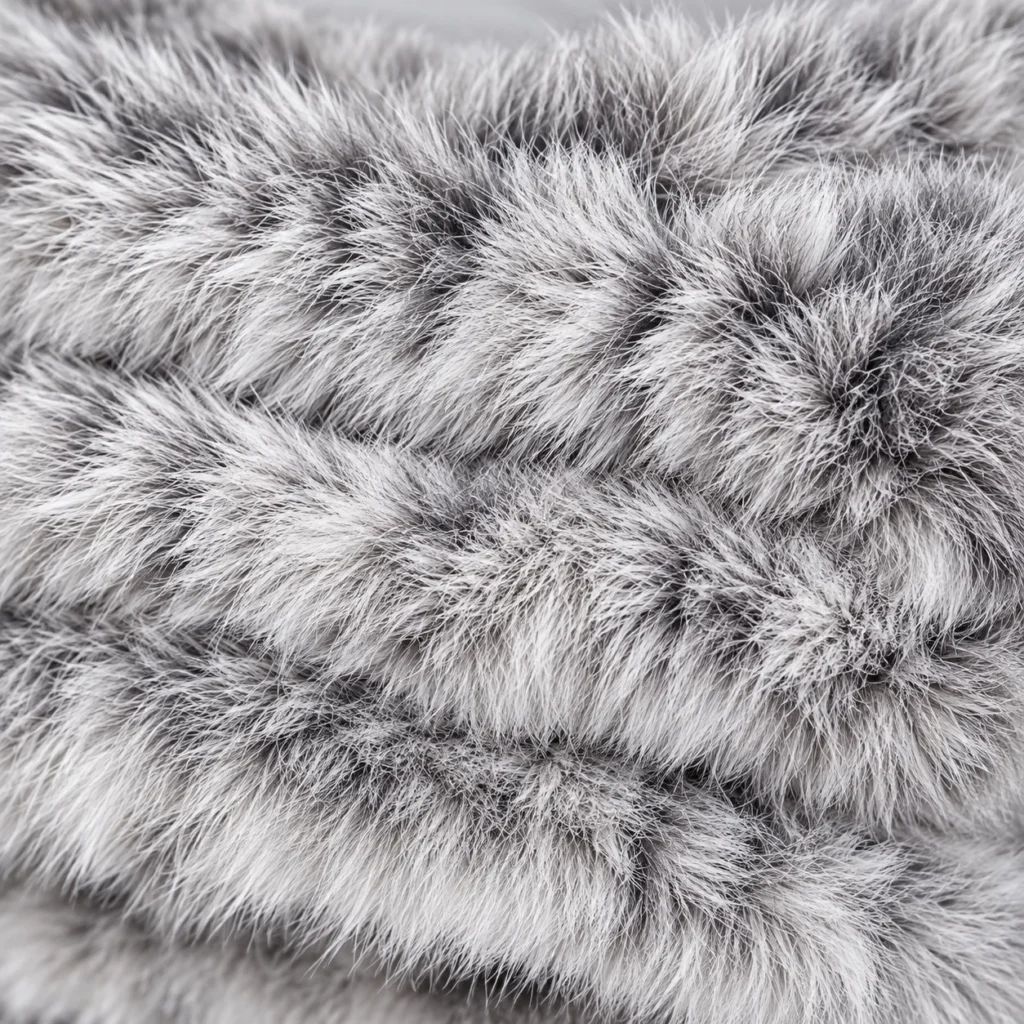
Real fur rarely has one flat colour. Yves Salomon notes that genuine fur displays “subtle gradations”, with each hair potentially showing several shades. Natural fox often has darker tips or a darker base.
Dyed fur is still real fur, and it often keeps some of this variation. Yves Salomon points out that on lighter dyes, darker guard hairs can stay visible. So a baby pink or silver fox is no sign of faux. Our Svalbard Hat in Pink, for instance, is a soft pink fox with tips that are almost white.
- Check the weight
Real fur, with its leather base, is generally heavier than faux fur of a similar size, though good pelts should still feel light and supple. This check works best when you can compare two pieces side by side. Fox is a special case: it has a lot of volume for very little weight, so a big fox collar may feel lighter than you expect.
- Try the pin test
If you can reach the base, push a pin gently through it. According to Yves Salomon, a leather backing resists and needs more force, while a woven backing lets the pin slip through easily. Do this only on an item you own, at a hidden point.
- The burn test, as a last resort
The burn test is reliable, but it is only for something you already own, and only on a few hairs.
- Snip two or three hairs from a hidden spot, such as the inside of a cuff.
- Hold them with tweezers over a sink or a ceramic plate.
- Touch them briefly to a flame.
Real hair singes, crumbles to ash and smells like burnt human hair. Synthetic fibre melts and curls into a hard little bead and smells of burning plastic. Never hold a flame to the garment itself, and never test anything in a shop.
What does not prove fur is real?
- Price. Real fur trims and pom-poms can be surprisingly cheap, and expensive faux fur exists, so price is not a reliable signal either way.
- Shedding. Both real and faux fur can lose hairs or fibres. Some shedding in the first wears is normal for rabbit and new fox.
- Softness alone. Modern faux fur can be very soft. Use softness together with the base and the tips.
- A missing label. In the UK and the EU, textile garments with fur trim should say “contains non-textile parts of animal origin” under EU Regulation 1007/2011, which the UK has kept. But labels can be missing or wrong, so trust the base and tips first.
What if the fur is real: is that good or bad?
That depends on what you want. If you are trying to avoid real fur, these checks protect you. If you want real fur, they help you make sure you are getting what you paid for. Our comparison of real fur vs faux fur looks at warmth, lifespan and ethics side by side, and our fur types guide explains how fox, rabbit, rex rabbit and mink each look and feel.
Our pick to feel the difference
If you want one piece that shows exactly what real fur feels like, try the Halo Earmuffs. They are rex rabbit, so they feel like velvet rather than fluff, and the thick fur band and the cups are one continuous piece, so they read as one soft halo of fur around your head. They are rated 4.9 by 31 customers. Read more about the fur on our rex rabbit page, and if you are curious how real fur behaves over time, see does real fur shed?