To look expensive in winter, build your outfit around five things: rich texture, one statement fur detail, tonal colour, clean proportions and visible care. Get those right and a plain wool coat, jeans and boots will look more considered than a head-to-toe designer look worn without thought.
None of this needs a new wardrobe. It is mostly about editing what you already own, then adding one or two pieces that do a lot of the work. Here is each rule, with outfit formulas you can copy tomorrow morning.
Why do some winter outfits look expensive and others don’t?
Expensive-looking clothes share a few visual signals. The fabric has depth, so it catches light softly instead of shining flat. The colours sit close together. The shapes are deliberate, with nothing pulling, bunching or hanging at an awkward length. And everything looks looked-after: no pilling, no salt marks on the boots, no creased collar.
Winter actually makes this easier than summer. You wear fewer visible pieces, usually a coat, something at the neck, something on the head and boots, so each one carries more weight. Choose those four well and the outfit underneath barely matters.

- Texture: why does it make an outfit look richer?
Texture is the fastest way to look expensive, because the eye reads it as quality before it reads anything else. Flat, thin fabrics look cheaper in winter light. Dense, soft or brushed surfaces look richer.
The textures that work hardest: – Double-face wool, where two layers are woven together so the coat has no lining and a clean edge. – Chunky or ribbed knit, which adds depth even in black. – Suede and smooth leather, for gloves, boots and bags. – Real fur, which moves and catches light in a way no synthetic quite copies.
The trick is contrast. Put a soft texture next to a smooth one: a ribbed roll-neck under a smooth wool coat, a fur collar against leather gloves, a chunky knit with sleek tailored trousers. Two or three textures in one outfit is the sweet spot. Five starts to look busy.
- One statement fur detail: where should it go?
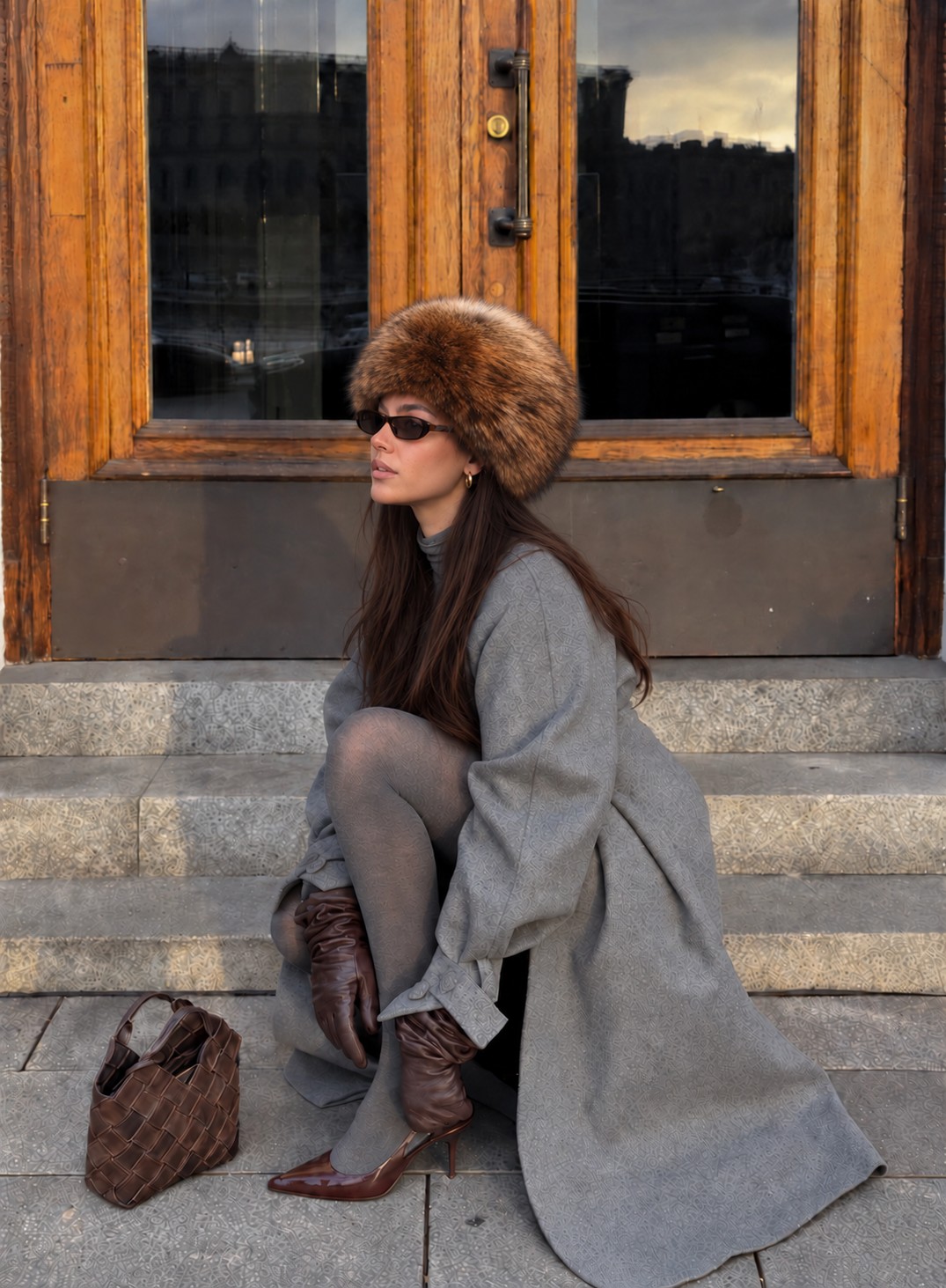
Choose one fur piece and put it where people look first: at the face, the neck or the hands. One detail looks deliberate. A fur hat, a fur collar and fur cuffs all at once start to look like a costume, so pick one and let the rest of the outfit stay quiet.
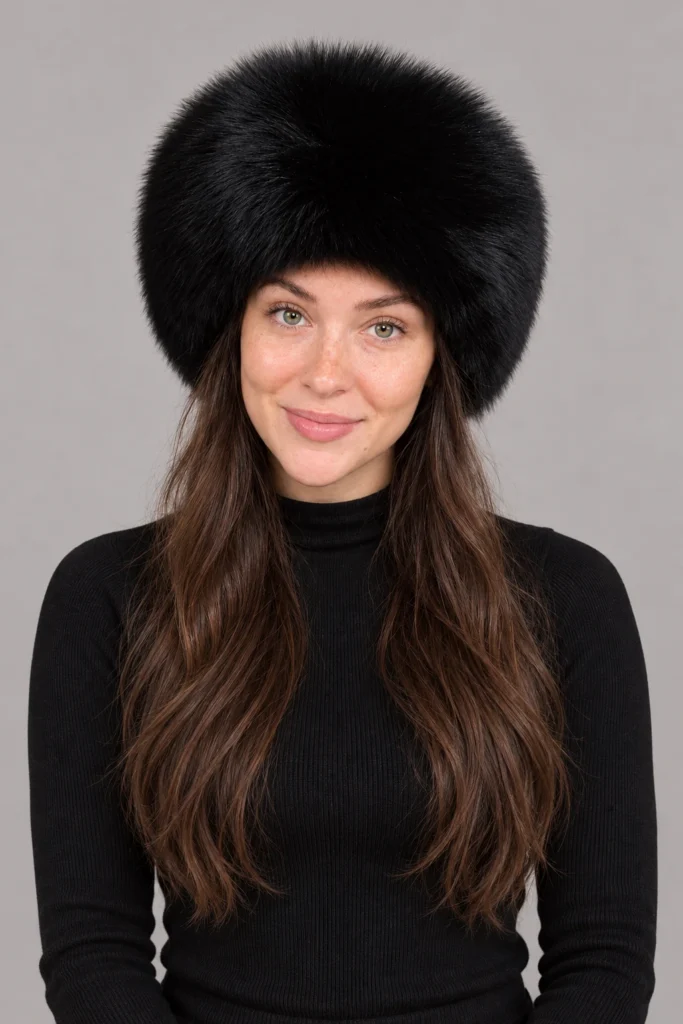
Each position does something different: – At the neck, a fur collar frames the face and makes a plain coat look tailored. We go through six ways to wear one in how to wear a fur collar. – On the head, a fur hat is the most dramatic choice and works best with a very simple coat. See how to style a fur hat for doing it without looking like you are off to a fancy-dress party. – At the wrists, fur cuffs are the quietest option and the most practical, because they move with your hands. Our guide to how to wear fur cuffs covers gloves, bags and rings.
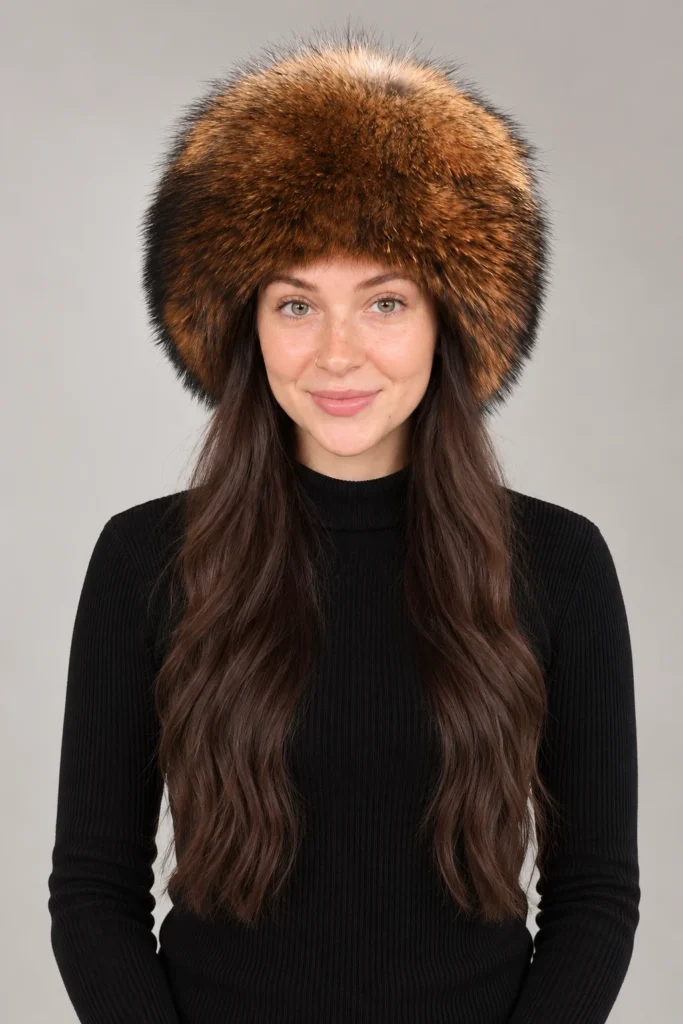
Why real fur specifically? Partly the look: fox has long guard hairs over soft underfur, so it has volume and movement, while rex rabbit is short and velvety. Partly the life of it. Cared for, real fur lasts for many years and is a natural material, while faux fur is a plastic textile. You can read more about the species on our fox fur and rabbit fur pages.

- Tonal dressing: which colours look the most expensive?
Tonal dressing means wearing several shades of one colour family from head to toe. It looks expensive because it looks planned, and because an unbroken column of colour makes you look taller and longer.
The winter palettes that never fail: – Camel, oatmeal and ivory, the classic warm neutral. Try a camel coat, an ivory roll-neck and cream trousers. – Grey on grey, from charcoal to dove. Grey is underrated and very forgiving. – Chocolate and mocha, which reads richer than black in daylight. – Black with one texture, where all the interest comes from fabric, not colour.
Match your fur to the palette. A white or ivory collar on an all-cream look is soft and luminous. A black fur hat on an all-black look is graphic and sharp. A natural fox tone, with its darker tips, ties together camel and brown. If you want a pop of colour, keep it to one small piece, such as a burgundy bag or a pink hat, and keep everything else tonal.
- Proportion: what lengths and shapes look polished?
Proportion is where most winter outfits quietly go wrong. A coat that stops at an awkward point, trousers bunching over boots or a jumper hem poking out below a short jacket all make good clothes look cheaper.
A few rules that solve most problems: – Long coat, slim or straight base. A coat that reaches the lower calf looks elegant over straight trousers or a midi skirt with knee boots. – Short jacket, long trousers. A hip-length jacket balances wide, floor-length trousers, which lengthen the leg. – Volume in one place only. If your hat or collar is big, keep the coat clean. If the coat is oversized, keep the accessories small. – Hems that land on purpose. Your jumper should be covered by the coat or clearly longer than it, never peeking out by two centimetres.
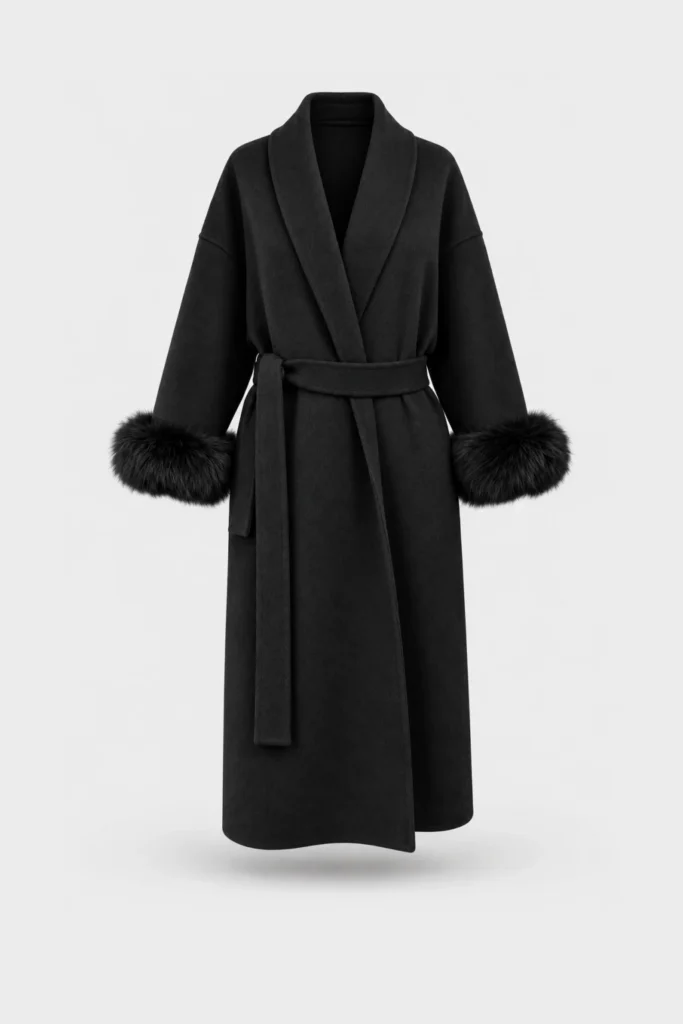
The Tundra Wrap Coat is a good example of proportion doing the work. It falls to the lower calf, wraps with a belt rather than buttons, and keeps all its fur at the cuffs, so the volume sits at the wrist and the long line stays clean. It is rated 4.9 by 25 customers.
- Care: why does it matter so much?
Nothing ruins an expensive look faster than visible wear. Pilled knitwear, a creased shirt collar and salt-stained boots cancel out a beautiful coat. Ten minutes a week keeps everything looking new.
- Knitwear: run a fabric shaver over cuffs and underarms. Fold, never hang, heavy knits.
- Wool coats: brush after wearing and steam out creases instead of ironing.
- Boots: wipe off road salt the same day and polish weekly in winter.
- Fur: shake it gently outdoors after wearing and let damp fur air-dry away from radiators. The Fur Institute of Canada advises never using a hair dryer and applying perfume or hairspray before putting fur on, because those chemicals dry the fur and dull its lustre. Store it in a cool, dark place with air around it, never in plastic.
Our full guide on how to care for real fur goes step by step through storage, rain and cleaning.
Three outfit formulas that always look expensive
If you only take one thing from this article, take these. Each uses the five rules.
The city weekday. Long camel wrap coat, ivory ribbed roll-neck, straight dark jeans, brown leather ankle boots, and a fur collar at the neck. Texture, one fur detail, tonal colour, a clean long line.
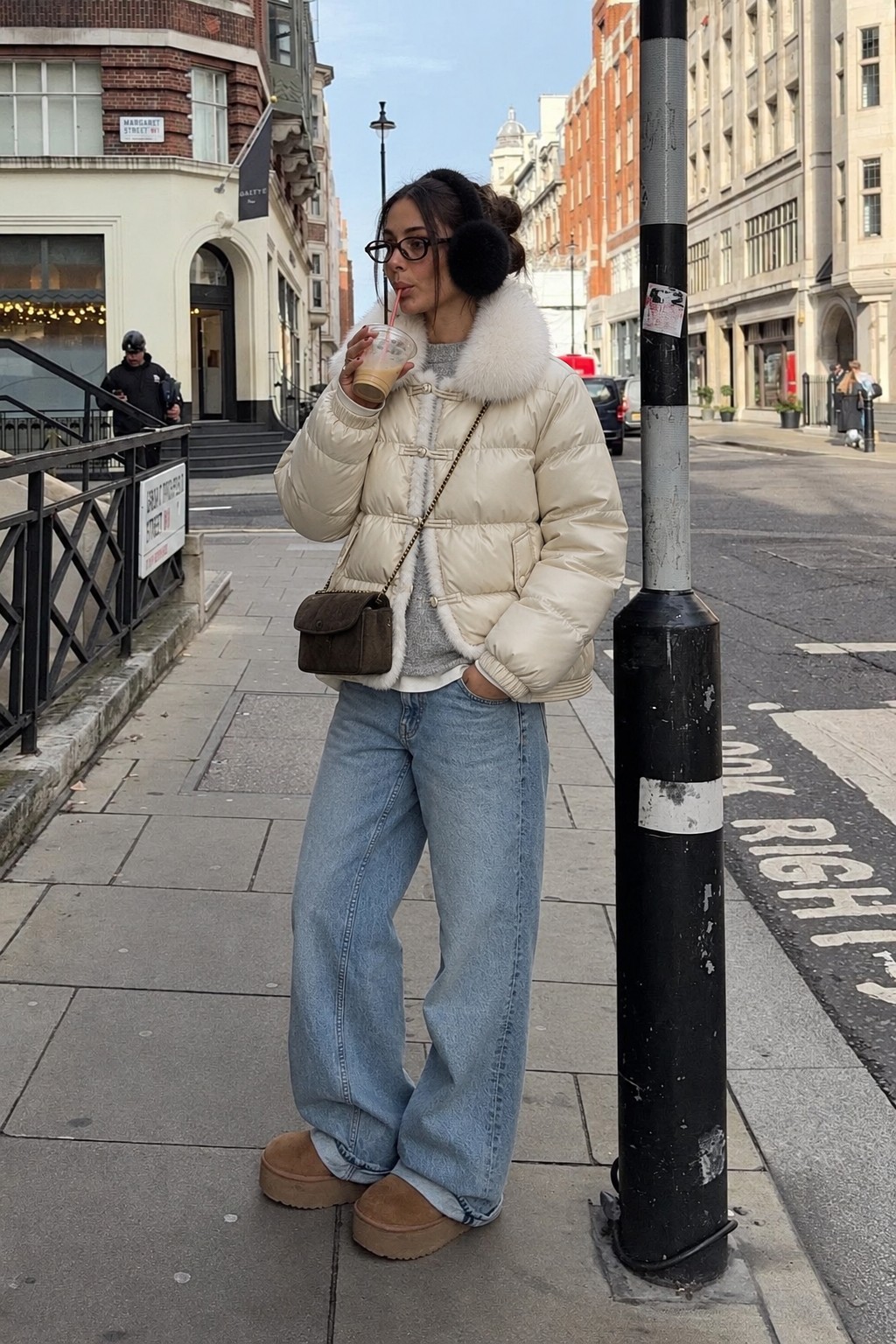
The cold Sunday walk. Short down jacket, wide-leg knit trousers in the same colour, flat boots, velvety earmuffs. Warm without bulk, and the earmuffs add one soft texture.
Dinner out. All-black: fine-gauge knit dress, sheer black tights, knee boots, black wool coat worn open, and fur cuffs over the coat sleeves. All the interest comes from the fur moving at the wrist as you talk.
What makes a winter outfit look cheap?
Usually it is one of these: – Too many logos or competing statement pieces. – Shiny, thin synthetics next to the face. – Five different colours with no link between them. – Fur that looks flat, matted or stiff. – A bulky puffer over a bulky jumper over a bulky scarf.
Swap one of these for its opposite and the whole outfit lifts.
Which single piece makes the biggest difference?
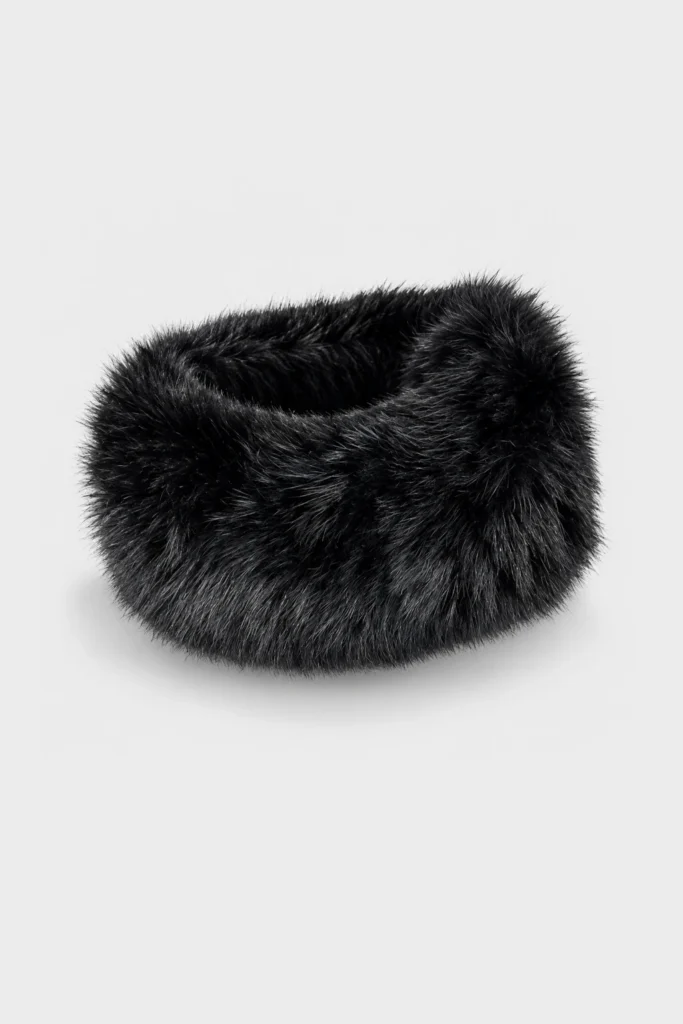
If you only buy one thing this winter, make it a fur collar you can move from coat to coat. It sits right under your face, it changes every coat you own, and it costs far less than a new coat. The one we keep reaching for is the Lumi Collar: hand-knitted strips of rabbit fur in a short pile, worn as a snug tube from the shoulder to just under the chin. It comes in Black, Natural Grey and White, so it slots into any of the tonal palettes above, and it is rated 4.9 by 27 customers.
Start there, keep the rest of the outfit simple, and you will look expensive every time you leave the house. If you are dressing for a particular stage of life rather than a single outfit, our edit of winter outfits for women over 50 puts the same rules into practice.